The Micronauts: Bleep to Bleep (pt. 1)

bleeptobleep Dear Matthew:

Since we’re talking about minimalism, I have some more bleeps and bloops for you — literally.

Though the Micronauts is now just one guy (Frenchman Christophe Monier), it was a two-piece (Quebecker George Issakidis) when they recorded one of the most strangely compelling electronic albums I’ve ever heard: Bleep to Bleep. It’s like they set out to make a nice little techno jam to play at their next rave, but just didn’t stop. The album is literally just the same song for 45 minutes. (Or, to be more specific, four takes of the same song, broken up with two noisy interludes.)

That sounds like it would be awful, but the repetition becomes the most fascinating feature of the album. The definition of minimalism that you gave me last week was ‘small amounts of musical material animated by obvious patterns’, and it describes the Micronauts perfectly. Monier and Issakidis are indeed working with an extremely limited palette — a drum machine, some very basic synthesizers, a sample of some strings and a smattering of miscellaneous percussion — and for 45 minutes, they build up an arrangement, then disassemble it, then rebuild it in a slightly different way, then take it apart again, tweak it, put it back together… they build and destroy, build and destroy, build and destroy for three quarters of an hour. It’s the same song throughout, and yet it’s never the same song for more than a few minutes at a time. It’s the musical equivalent of the Ship of Theseus. It’s riveting.

Keep in mind, too, that this was the late ’90s, so they’re working with the real deal here — they’re using actual synths and samplers and drum machines, they’re not just some kids messing around with Garage Band for an afternoon. So this is also a fascinating album if you’re at all interested in the technical aspect of electronic music production, especially before the era of the laptop DJ.

Now, this is definitely some straight-up ravey acid techno bullshit. Given your reaction to the dance music you’ve encountered so far over the course of this project, I’m not sure how you’ll react to it. It’s entirely possible that you’ll hate this album. Worse yet, you might be completely indifferent to it. But all I know is, I find this album totally captivating. And since you’re into a guy who makes music by looping slightly-out-of-phase recordings and swinging microphones over speaker cones, hopefully you will too.

— Matt

PS: After you give Bleep to Bleep a spin, it’s worth checking out the single that was released from the album — essentially, the entire album distilled into something you can play on the radio. It’s called ‘Baby Wants to Rock’, and its running time? Three minutes and 19 seconds.

Michael Nyman & Motion Trio: Acoustic Accordians (pt. 2)

Acoustic Accordions

Dear Matthew:

This is good shit.

Seriously, I enjoyed this album way more than I thought I would. I mean, I didn’t think I wouldn’t like it, but I didn’t expect to be totally floored by it, either. Where I’m having trouble, though, is quantifying exactly why.

Maybe it’s the Baroqueness. I’m not a hugely informed classical listener, as you know, but Baroque stuff has always been my favourite. Of the ‘rock stars’ of the classical pantheon, Bach has always been the one I’m most into. When I took piano lessons as a kid, my favourite pieces to play were always from List A — the Baroque repertoire. This is even reflected in a lot of the modern acts I’m into — Ratatat and Justice both smack of this stuff, and it’s my favourite feature of their music. I also like a lot of music that is definitely influenced by minimalism — Daft Punk spring immediately to mind, but there are certainly others.

Maybe it’s the playing of Baroque music on instruments other than what I’m used to hearing Baroque music on. An epiphany I’ve had over the course of writing this blog is that one thing I’m really into in music is recontextualization — I love picking out samples, I enjoy clever and unexpected mashups entirely too much, and I have enormous respect for good DJs (there aren’t many). I love music that takes something familiar and twists it in an unexpected way. That’s certainly what’s going on here. It reminds me of what little Wendy Carlos I’ve heard. (Mostly just the A Clockwork Orange soundtrack. But apparently she and Weird Al did an interpretation of Peter and the Wolf, and I now desperately want to hear it.)

But what specifically is it about Baroque music that’s so compelling? Why am I so into it? What is the source of its driving rhythm and energy? What magical switches is it flipping in my brain with its complex, mathy harmonies and incredibly satisfying modulations and resolutions? I’m seriously asking. I’ve heard about Mozart’s brilliance and Beethoven’s intensity and whatever else, but I’ve never gotten a satisfactory answer to a question that I didn’t realize was bothering me so much until I sat down to write this: Why is Bach so damn good?

Also: while listening to the bonus Michael Nyman Band piece from The Cook, the Thief, His Wife & Her Lover I couldn’t shake the mental image of the cartoon characters in Victorian garb trying to be inconspicuous in a funeral procession. I am confident that it improved the listening experience significantly.

— Matt

Michael Nyman & Motion Trio: Acoustic Accordions (pt. 1)

Acoustic Accordions

Dear Matt:

Let’s not bury the lead, here: this week, you’ll be listening to neo-classical minimalism played on accordions.

Alright. Now, let’s take a few steps back. Michael Nyman is an English composer whose career took off in the 70s. I think of him as England’s response to Philip Glass. Both are generally classified as composers of ‘minimalist music,’ though Glass disdains the term. Nyman is thought to have coined it.

Minimalist music, to oversimplify ludicrously, uses small amounts of musical material animated by obvious patterns. It can yield strikingly varied musical results, depending on the bag of tricks possessed by a given composer. Steve Reich does minimalism by way of phasing. Glass does it (in spite of himself) by way of additive and subtractive processes. Nyman tends to do it by swiping bass lines and chord progressions from the likes of Purcell and Mozart and just repeating them over and over again with textural variations. The source material makes it feel more ‘classical’ than any of the other minimalists, but it still has the same directness and drive.

Nyman writes a lot of music for his own band, which has a really distinctive sound that informs the way he composes. A big part of that sound is that they do not play in tune, to such an extent that I can only assume it’s deliberate. Their terrible intonation gives the impression of a troupe of Saturday morning cartoon characters having found themselves in a Victorian novel and trying to act naturally. It’s fascinatingly grotesque.

The esoteric little album I’ve chosen for you this week does not feature the Michael Nyman Band, but I feel that you should know what they sound like, just for context. So, I’m appending a 12-minute prelude to your assignment proper. (After last week’s tripartite Amon Tobin marathon, I feel no guilt whatsoever.) That prelude is the tremendous funeral march, Memorial.

Like most of what you’ll be listening to this week, Memorial appeared in a film by Peter Greenaway, a director that Nyman collaborated with on 11 films. Greenaway’s directorial sensibility is so painterly that in the movie Memorial appears in — The Cook, the Thief, His Wife & Her Lover — he had his actors wear different costumes in different rooms so that they’d fit the colour scheme. His movies represent a perfect blend of the very modern and the very Baroque, making Nyman the perfect musical counterpart.

(Apparently, Greenaway is at least partially responsible for Nyman’s constant Baroque references. He often requested that Nyman reference very specific pieces by composers like Heinrich Biber.)

Now. On to Acoustic Accordions. The Motion Trio are three Polish accordion players who you’re more likely to find playing Penderecki than polka. This album finds Motion playing Nyman’s music with the composer himself plunking along on the piano (with occasional interjections from Nigel Barr on trombone and euphonium). It mostly consists of music that was originally written for the Nyman Band and featured in Greenaway’s movies.

There are two notable exceptions: Nyman takes a solo piano turn on “The Heart Asks Pleasure First,” which is from the movie The Piano (very much not directed by Greenaway) and is probably his most famous melody. And, the album’s final track, “Silence,” actually has nothing to do with Nyman at all, except in an anxiety-of-influence sort of way. It was written by the Motion Trio’s own Janusz Wojtarowicz, an accomplished composer in his own right. Wojtarowicz is also responsible for the arrangements on this album.

I have lots to say about this music. I could get really analytical. But, it strikes me that this album, obscure as it is, comes completely unencumbered by cultural baggage. So, let’s run with that. I’ve given you the context; I’ll let you supply the opinions.

As always, I do hope you like it.

— Matthew

Amon Tobin: ISAM (pt. 2)

isam

Dear Matt:

God, I also love Amon Tobin. I love him so much that I wrote 1400 words on him. Strap in.

You mustn’t have actually thought there was a chance I wouldn’t like this, right? This provides exactly the same kind of sensory overload that makes me love Mahler and Yes and electric Miles Davis so much. It’s actually amazing how soon I knew I was going to love this. I suspected I would as soon as I saw the art, actually. But I knew this was going to be my kind of album within the first minute.

So, let’s look into that first minute a little more closely.

Journeyman‘ begins with three simultaneous sound qualities: something that sounds like a cymbal roll with mallets, a noise like windswept paper kept down low in the mix, and a series of slow, rhythmic bworps. The bworps set the tempo for the track and act as the first source of tension. (What will the next bworp sound like? And the next?) Eight or nine bworps in, they begin to change more perceptibly, like Tobin is turning up the cutoff frequency on one of his ad-hoc synths (which may be what he’s doing, although I’m not nearly well-versed enough in these matters to know).

But, just as it seems like a pattern is developing (the bworps will keep getting higher in pitch), Tobin pulls back on the reins and keeps them consistent, making way for the incoming percussive noises. Note that I didn’t say ‘beat’ — because ‘beat’ would imply that there’s a pattern in play, and other than the steady tempo, there doesn’t appear to be. A series of Wurlitzer-like tones plays in double time to the bworps, with emphases placed seemingly arbitrarily. Certainly, they have nothing to do with what beat of the measure we’re on.

As the track builds, Tobin introduces new sounds sequentially. He does use some of them more than once, but never with the same melodic fragments. Virtually the entire opening — the entire track; the entire album — is an exercise in constantly generating new material. Something happens, then something else happens, then something else. There is very little recapitulation.

It’s a miracle how Tobin can hold attention with this technique. Patterns, you see, are what makes music make sense. Musicologists and mathematicians agree on that. ISAM works differently; it builds to something, then refuses to follow through, instead choosing to keep going off in new directions. It’s basically the opposite of that kind of music I mentioned in my Belle and Sebastian response — the kind that feels clear and self-evident. This is music where you can always feel a human consciousness pushing and poking at it, ensuring that it never falls into a pattern that feels natural, or straightforward.

Evidently, both extremes can be equally satisfying.

I could really go on about the album, but you’ve assigned me more, and I’m already embarrassingly late on this, so I’d best move on.
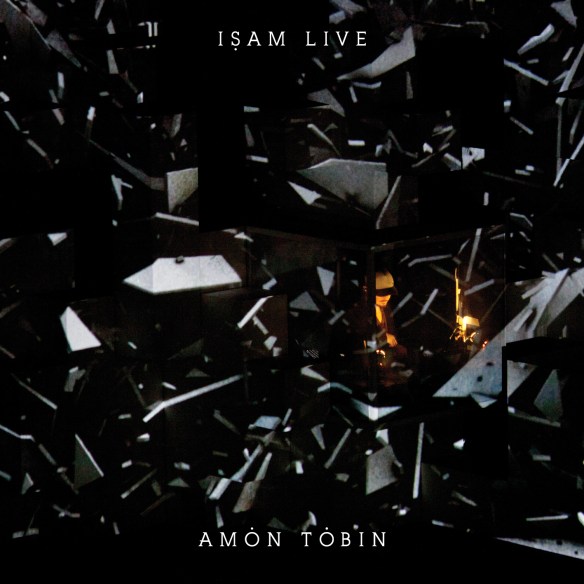
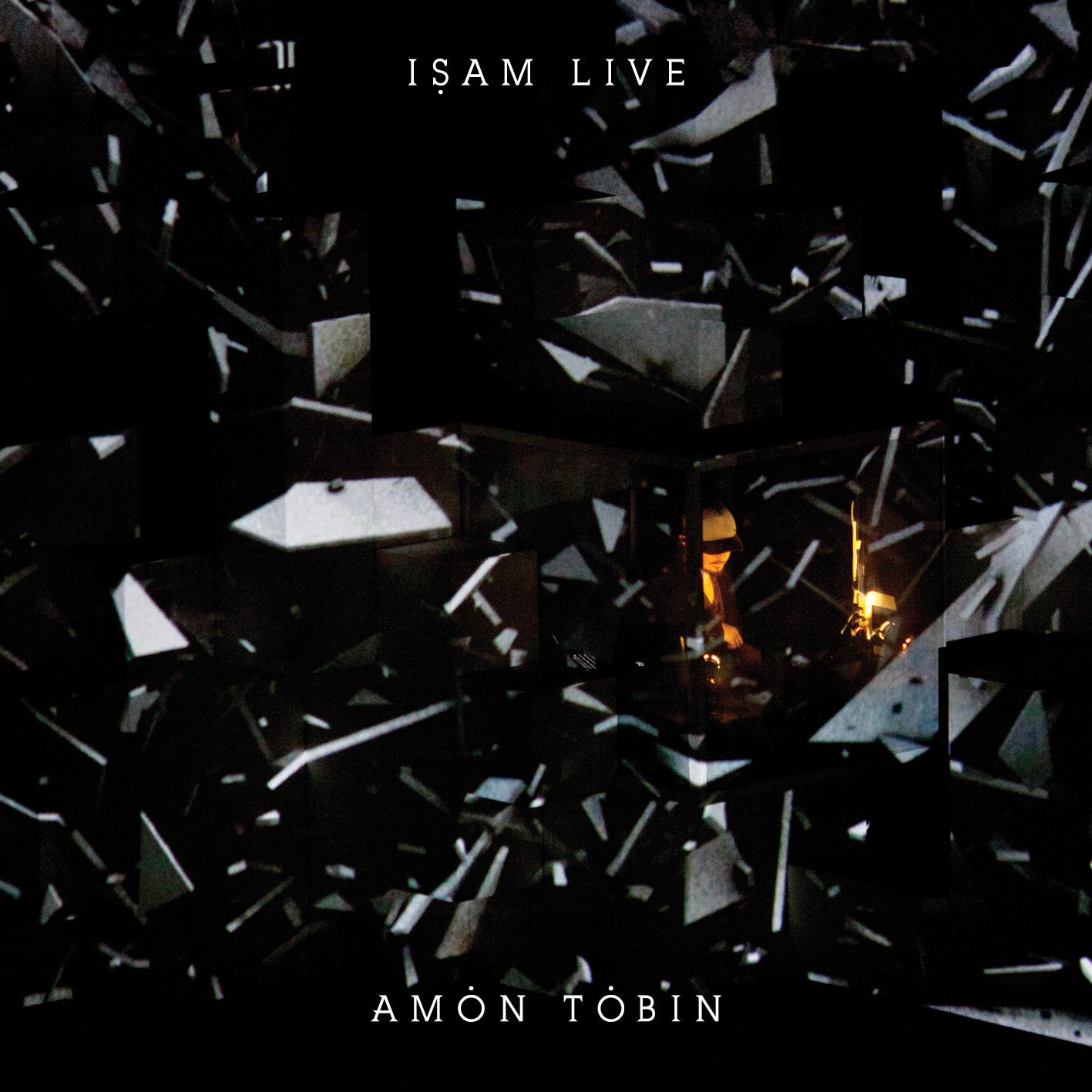
isamlive

Pretty much as soon as I started watching ISAM Live, over a bowl of Thai coconut soup at my desk, I realized that the visuals were basically going to be the point. There was altogether too much daylight in my living room for me to properly appreciate this sort of dark psychedelia, so I shut myself in my closet with my laptop. I built a little armchair out of pillows and everything:

Childlike darkness cave

It struck me as I was huddled in my childlike hideaway that if the pest inspector happened by while I was in there with headphones on, they might well conduct their whole search without realizing I was there. That put me in the exact opposite position to the one Amon Tobin was in during his ISAM shows: had the central cube that he was seated in been just a few shades less translucent, he could have been entirely absent and nobody would have known the difference.

But, before you assume that I’m about to launch into a facile and uninformed indictment of live electronic music, let me tell you about a similarly elaborate projection-mapped concert that I’ve been to. Roger Waters’ 2010-13 touring production of Pink Floyd’s The Wall is in every sense the most spectacular live event I’ve experienced. The basic premise of the show is that throughout the first half, a giant wall is built between the band and the audience, for metaphor reasons.

The show was a rejig of Pink Floyd’s original Wall tour from 1980-81, which was inspired in part by Waters’ anxieties about stadium rock shows. At those gigs, most of the audience is so far away from you that you may as well just be miming. So, Waters decided to test his audience’s trust by literally building a wall between him and them on the next tour. The original Wall show even started with a “surrogate band” playing the first song in Pink Floyd rubber masks.

Waters’ recent remount of the show brought these themes into even starker relief, since it’s an open secret that he can’t sing anymore and most of his live vocals are mimed to backing tracks. When I saw The Wall, I found it curiously easy to get past that, considering my classical background, etc. I just accepted that Waters did not serve a musical purpose at that show, but a semiotic one: The Wall is his masterpiece and his story. His presence adds power, whether he’s actually singing or not.

I don’t know enough about the kind of music Amon Tobin makes to be able to tell what’s going on in his little control pod. It seems like the music on ISAM Live is sufficiently different from the studio version (and sufficiently more predictable, suggesting that maybe he has to let certain processes run their course while he focuses on other things) that I’m quite certain he’s driving the show somehow.

But, it kind of doesn’t matter to me. If prog rock god Roger Waters can mount a show where his musical participation is immaterial, then we’re obviously past the point where ‘he might not even be doing anything’ is a sufficient argument against any live performer.

ISAM Live is not a stunt or a high-wire act. It is not a Magma concert. It is an immersive aesthetic experience — the home viewing of which demands a decent pair of Sennheisers and a darkened room (or closet). Tobin could be sitting perfectly still and staring into space in that central cube while his album plays, and his simple presence at the centre of the set — the creator of this beautiful thing — would still be symbolically resonant. The fact that he chooses instead to work for his living each night makes me love him all the more.

Jesus Christ, I still have to write about the DJ set.

Okay. I’ll keep this brief. Because, regrettably, I didn’t get much out of Tobin’s Two Fingers persona. I talked a bit in my Beardyman response about my confusion over not dancing to dance music. There’s a huge gulf between Two Fingers and Beardyman, clearly. And that gulf means the difference between me being able to listen to it and not.

I could listen to Beardyman, because his music strikes me as ‘listening music’ that put on dancing shoes semi-ironically. It’s jokey and deconstructivist, and the thought of anybody dancing to it still seems a little weird to me. Two Fingers, on the other hand, is a skilled peddler of ‘straightup dancefloor devastators,’ in your memorable phrase. Maybe someday I’ll understand why people listen to music that’s intended for the dancefloor. But yesterday was not that day, nor is today. Tomorrow’s not looking promising.

And as you know, I’m not likely to actually dance to it, either. I’m not the audience for this.

Now let me close out this more-discursive-that-usual response with a random thought that doesn’t really connect to anything.

It seems to me that a DJ set is the opposite of a live classical music performance. DJs are basically improvising: they’re spinning out a unique, spontaneous product that is paradoxically produced with pre-existing musical ingredients that are set in stone (or rather, vinyl; or ephemeral digital something-or-other). At the classical concert hall, they’re going for a performance that adheres to the composer’s score, while having no pre-existing sonic building blocks to construct it from.

I know which of these poles I prefer, aesthetically. But, at this juncture in our correspondence, I’m not sure which one can claim more of my respect.

— Matthew

Amon Tobin: ISAM (pt. 1)

isam

Dear Matthew:

I feel as though we should move directly into the bleeps and bloops at this point.

Amon Tobin is one of my favourite musicians maybe ever. He got his start in the 90s as part of that wave of chilled-out British drum and bass that formed the entire soundtrack of shows like Spaced, a sound that his label Ninja Tune (with whom he is still signed) practically invented. He worked with samples, usually of old jazz records, cut up and mashed together to create new songs altogether. After a few records like this, however, Tobin began to get bored, and started going increasingly further afield when sourcing his samples, twisting and processing them further and further beyond recognition. His sound started to get darker, bigger, and crunchier. Then, like Eno before him, he started getting conceptual. He started doing soundtracks. He did an album where he recorded all of the samples himself. And then, in 2011, he released an album created entirely with synthesizers he created himself digitally — many based, of course, on his own field recordings. The album was called ISAM (Invented Sounds Applied to Music), and that’s what you’ll be listening to this week.

ISAM is incredibly ambitious. The aural palette Tobin creates for himself is absolutely massive, and the range of emotions he’s able to evoke with it is equally broad. ISAM is bombastic, haunting, ponderous, playful, and everything in between. Some tracks are more like experimental sound design than anything you could reasonably call music. It sounds nothing like any of his previous work, and yet it’s still unmistakably his work. It was never going to be a crowdpleaser, but if people are still talking about Tobin in twenty years, my money is on this album being why.

Now, when you release a new record, your label usually wants you to go on tour to support it. But what do you do when you make electronic music that is, for the most part, completely impossible to dance to? In the 90s, Tobin’s solution was to learn to DJ so he could play music that people actually would dance to, and he soon started pushing technological boundaries there, too. (He was one of the first big names to embrace vinyl emulation software like Serato, which is now industry standard.) But ISAM was such a completely different beast that touring it that way just didn’t make sense.

So, he didn’t.

isamlive

Surprise! This week’s assignment is a double bill. After you listen to the studio version of ISAM, you’re going to be watching a film of ISAM Live, the show Tobin and a team of engineers, artists and programmers created to tour it.

I’ve always found live electronic music to present an interesting dilemma. A lot of producers start off as DJs, so their live show usually follows that sort of spontaneous, semi-improvised format. But when your music isn’t designed for the dancefloor and you can’t feasibly recreate it live, how are you supposed to perform it? Do you just sit down on stage in front of your laptop and press play? Daft Punk seem to have found the answer in 2006, which I’ve written about elsewhere: you create an arena-sized audiovisual experience. But, when you do that, you have to plan everything out in advance, and if you’re a DJ, that makes you nervous. So there’s this interesting sort of cognitive dissonance you have to navigate within the scene, and you can get a lot of grief if people think you’re doing it ‘wrong’.

I will state unequivocally that, for my money, Amon Tobin is the greatest DJ in the universe. But ISAM Live is about as far from live DJing as you can get. The set is a blocky expanse of cubes covered in techy, psychedelic projection-mapped video, and Tobin is up there in his control pod pressing buttons that are presumably connected to something, but when you get right down to it, you’re not watching something spontaneous — you’re watching a tightly rehearsed performance. This might not seem strange to someone with your background, but remember that most electronic musicians start as DJs, so for them, this approach is highly counterintuitive. With ISAM Live, Tobin was at the forefront of a new take on live electronic music, one the broader scene still hasn’t quite wrapped its head around.

I’ve already written a lot, so at this point I should probably shut up and let the music (and video) speak for itself. I am extremely interested to hear what you make of all this.

— Matt

PS: ISAM Live includes the first encore from the performance, but both times I saw it (shut up, he toured with a beefed up version of the show a year later), he did a short DJ set as a second encore afterward. And, since I did claim earlier that he is the greatest DJ in the universe, I’m also going to have you listen to that second encore from the second version of the ISAM Live tour, which was released as a free download. It’s got stuff from other artists, but it’s mostly tracks by Two Fingers, a side project of Tobin’s where he takes all of the insane stuff he does in his solo career, like building a bunch of digital synthesizers from scratch, and makes straightup dancefloor devastators with it. God, I love Amon Tobin.

PPS: Check out the original artwork for ISAM. Like the final artwork and the artwork for the single ‘Surge’, it comes from an installation by visual artist Tessa Farmer called Control Over Nature, created specifically for the album. God, I love Amon Tobin.

Brian Eno: Another Green World (pt. 2)

Eno

Dear Matthew:

This is a really cool album.

I mean, I know who Brian Eno is — he’s that guy who did all those albums that Music People like. But, apart from a cursory listen to Here Come the Warm Jets a few years ago, I don’t really have any experience with his music firsthand, unless you count my ongoing love affair with ‘Once in a Lifetime‘. That reputation always kind of preceded him, and I always figured he’d just be too arty for me, or something.

But, digging into this album, what I immediately noticed was what you meant by the album’s agelessness. I listened to the 2004 remaster, which probably helps, but you’re right — you could’ve told me that this came out last year and I would’ve believed you. Eno was unbelievably ahead of the curve, especially given what you’ve told me about his working methods. In his attempts to be more a sort of curator of sound than a musician himself, he set the mold for the careers of any number of modern producers who, in your phraseology, play people rather than instruments. Your new friend Dan the Automator springs to mind as a particularly apt example of this approach to music production.

I’m also reminded of the Kate Bush album you had me listen to, in that I’m seeing all kinds of groundwork for modern music I’m already really into. Acts like Amon Tobin, Four Tet, Sigur Rós, and even arguably guys like Flying Lotus or J Dilla — they’ve built entire careers on the foundation provided by tracks like ‘Sky Saw’ and ‘In Dark Trees’. Most of these guys work primarily with samples rather than live musicians, but I think that means the Eno paradigm actually applies even more.

(‘In Dark Trees’ actually gave me the most incredible feeling of déjà vu when it came on, although I soon realized that’s because it appears in Electroma, Daft Punk’s 2006 arthouse film about two robots who want to become human.)

My only complaint about this album is that a lot of the songs seem … unfinished. A lot of tracks — usually the shorter ones, but not exclusively — feel more like demos than like polished final versions. Maybe it’s because I’m used to modern guys like the Chemical Brothers who will take a good musical idea and run it into the ground for twelve minutes at a time, but a good two thirds of the songs on this album feel like they end too soon. I feel like I’m just starting to sink my teeth into them, and then they stop. That’s actually probably the giveaway for dating this album: had it come out last year, it would probably be at least an hour long.

Anyway, congratulations. I think you’ve found your first album to hook me the same way Deltron 3030 and Wrong hooked you. Now! To sit back and wait for it to spring to mind unbidden.

— Matt

Brian Eno: Another Green World (pt. 1)

Eno

Dear Matt,

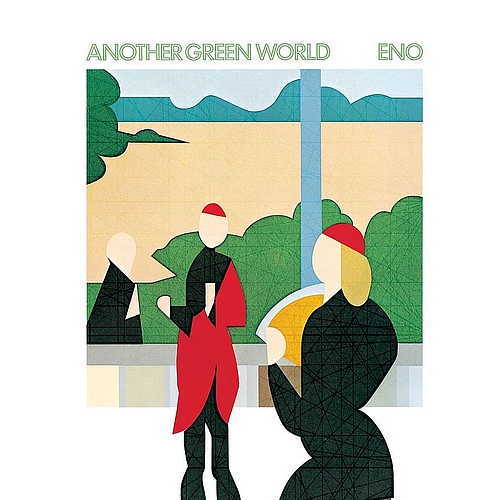
This week, you’ll be diving into the definitive album by a figure with whom you have a passing familiarity already: Brian Eno’s Another Green World.

To our generation, Eno’s best-known creation is probably this sound, here. Insofar as his name means anything, it’s probably ‘massively prestigious record producer.’ Eno helped to craft some of the most acclaimed albums by David Bowie, Talking Heads and U2, amongst others.

But, at the time of Another Green World, he was not yet the Eno of legend. This was five years before Remain in Light, and 12 years before The Joshua Tree. In 1975, Eno’s career basically consisted of two albums as a synth player with Roxy Music and a couple of pretty straightforwardly glam rock solo albums — which, by the way, have two of the most fantastic titles ever: Here Come the Warm Jets and Taking Tiger Mountain (By Strategy).

Another Green World was a turning point for Eno in that it was the album where he stopped focussing on writing songs, and started focussing on making rules, instead. Reading about the way this album was made is just maddening: Eno basically hired a bunch of top-flight musicians (John Cale on viola, Robert Fripp on guitar, Phil Collins on drums…) and invited them into the studio without having written any music.

Then, they’d just try stuff. Eno would impose arbitrary rules, like ‘the microphones will hang from the ceiling, today,’ and he’d hope like hell that it wasn’t all a tremendous waste of money.

I have no idea how those methods could have resulted in this album. Another Green World is an astonishing feat of musical craftsmanship. It is unbelievably detailed; even in comparatively minimalistic tracks like ‘Zawinul/Lava,’ there’s so much going on in the background to produce musical tension.

Also, the fact that Eno abandoned all traditional methods of making an album might account for why Another Green World is so weirdly ageless. I’m not sure I’d be able to tell what decade it was made in if I didn’t already know.

This will also conveniently serve as your introduction to a figure you’ll be hearing more from in the near future: King Crimson’s guitarist and leader Robert Fripp. I love King Crimson, but when I just want to hear Fripp playing the stuffing out of his instrument, I’m most likely to put on a Brian Eno album. Because, Robert Fripp’s ability to play the guitar is second only to Brian Eno’s ability to play Robert Fripp.

That’s what makes Eno kind of unique in all of music. He describes himself as a ‘non-musician’ (he even tried to get that listed as his occupation on his passport), but he’s been able to spearhead some of the most staggering albums of the past fifty years, just through the sheer power of lateral thinking and clever leadership.

By the way, the small crisis I seem to have experienced after Belle and Sebastian failed to knock me flat has basically passed. You mentioned to me shortly after I posted my response that Belle and Sebastian isn’t the kind of band that does knock you flat on the first listen; it takes a while to sink in. After a couple more listens, I can feel it happening already, and I have renewed faith in my ability to appreciate new music.

I bring that up mostly because Another Green World is very much the same in that way. It took me years to think of this as anything more than ‘fairly good.’ I don’t know another album that benefits more from living with it for a while. So, listen to it once and tell me what you think. Then maybe ignore it for a bit and whenever it comes to mind unbidden, try again.

Since the beginning of this project, I’ve been looking for an album that will grab you by the throat and start you up on new and unexpected musical journeys. This is not going to be that album. But, I’m pretty confident that, given your other tastes, you’ll eventually love this.

— Matthew

Belle and Sebastian: The Life Pursuit (pt. 2)

belleandsebastian

Dear Matt,

I’m a fan of feelings. I have a whole bunch of them — possibly something close to a complete set. Certainly, more than anybody would suspect from actually talking to me.

But, before I talk about feelings, I want to talk about facts.

One sure way for any band to pull me in is to make references that I understand. Lyrical references, stylistic references, whatever. And as you’ve implied a couple of times already, Belle and Sebastian live comfortably within my cultural sphere — namely, an imagined version of the ’60s that neither I nor Stuart Murdoch can claim to remember.

Actually, the references here span a larger swathe of my knowledge even than that. Did you know, for instance, that Mornington Crescent is a recurring feature on a popular BBC comedy programme, in which panelists take turns naming London tube stations until somebody says ‘Mornington Crescent?’ It’s the British equivalent of Calvinball. No idea what, if anything, that has to do with the song.

But I promise that I didn’t only like The Life Pursuit because it flatters me for my understanding of references that I might actually just be imagining. Ultimately, I am just a sucker for a great melody, and there are plenty of them here. I mean, the shapes of the phrases in ‘The Blues Are Still Blue’ are just irresistible. And that trumpet in ‘Dress Up In You.’ Ahh.

And you’re right that they can sound a lot like the Zombies sometimes. Although, I think that what they have in common is more of a spirit than a sound. Both bands produce a kind of music that I’ve never quite been able to adequately describe: it is natural music. It seems obvious, self-evident, like it could have written itself. There’s no artifice to it. Other artists that come to mind are Paul McCartney and Felix Mendelssohn.

But here’s the thing: I can think of exactly nothing else interesting to say about this. My usual approaches are failing me, here. I don’t feel alienated by The Life Pursuit, nor did it leave me feeling inclined to compose a fawning encomium. It doesn’t suggest a particular part of my musical autobiography that I could riff on. I do not detect any actual magic in it.

Don’t interpret any of this as a vote of no enthusiasm. I can tell I’ll be spinning The Life Pursuit with some frequency in the near future. It’s just… here we are right now with you saying you liked the Zombies, but you’ll never like them as much as Belle and Sebastian. Here I am saying I liked Belle and Sebastian, but I’ll never like them as much as the Zombies. To be fair, a certain amount of intransigence is to be expected with music nerds like us.

But, you’ll recall that when we started this project, I expressed a concern that my musical tastes were calcifying. It’s still a concern. There’s a part of me that despairs to think that at the age of 24, I’ve already reached the point where I’ll never find new music that I like better than my old music.

And, The Life Pursuit somehow really brought that anxiety to the surface. Because I liked it. I really did. I’ve liked nearly everything you’ve assigned so far. Loved some of it. But none of it has knocked me flat like the prog I discovered in high school, or the classical rep that my first degree introduced me to.

Two months into this project, we’ve both got more music that we kind of like. Surely, this is an entirely acceptable outcome. So, why does it feel like an impasse?

— Matthew

Belle and Sebastian: The Life Pursuit (pt. 1)

belleandsebastian

Dear Matthew:

How do you feel about Feelings? Because it has come to my attention since my last post that you’ve never listened to any Belle and Sebastian.

You may recall that I have previously described the Glaswegian indie pop legends as one of the staple bands mopey college kids were listening to in the mid 2000s. Along with Rilo Kiley, LCD Soundsystem, Bright Eyes, Tegan and Sara, etc., these guys were the bread and butter of a particular variety of melancholy music nerd when I was finishing high school/starting university — I know you know the type. Belle and Sebastian are more than a little twee, and the word ‘wistful’ seems to have been invented specifically to describe both the lyrics and delivery of frontman and main songwriter Stuart Murdoch — who, as previously discussed, may in fact be some sort of ageless time traveller who has been making pop music in Great Britain since the ’60s. Belle and Sebastian is a band that runs entirely on nostalgia and hooks. I love them, obviously.

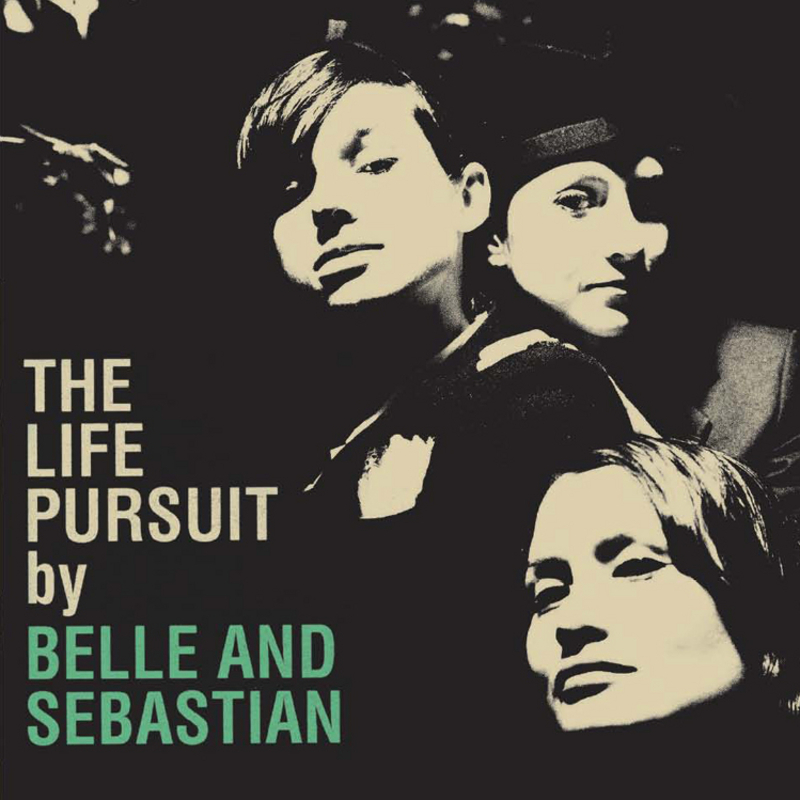
The hardest part of this assignment has been deciding which album to start you out with. Most B&S diehards will tell you that their second album, 1996’s If You’re Feeling Sinister, is their undisputed masterpiece, and that you should start there. That’s what I did initially, though, and I wasn’t exactly blown away. I filed them away as one of those bands that other people love fanatically that I just don’t ‘get,’ like the Smiths or Bob Marley. It wasn’t until I gave 2006’s The Life Pursuit a spin that I really got hooked. It’s a much peppier, catchier, less despondent, more energetic, more radio-friendly affair than — well, than any of their previous records, really, while still being undeniably a Belle and Sebastian record. Sure, it doesn’t have any ‘classics’ like ‘The Boy With the Arab Strap‘ or ‘I’m a Cuckoo,’ and the first track is a bit of a slow burner compared to the tremendous numbers that start their two most recent albums. But if I was going to list what it has got, I would just end up writing out most of the track list. This is a very easy album to like, and I want you to like this band.

This brings up an interesting question about ‘getting into’ bands with big catalogues and huge fanbases that I’ve struggled with for a while. Most such bands do have a particular album commonly agreed upon as their magnum opus that most fans will point you toward: Daft Punk has Discovery, the Beach Boys have Pet Sounds, Pink Floyd has The Dark Side of the Moon, etc. But as often as not, a band’s so-called ‘classic’ album doesn’t end up being the one that hooks me. I didn’t get into Tegan and Sara until I listened to Sainthood and I didn’t get into Rilo Kiley until I listened to Under the Blacklight, which to ardent fans of those bands is kind of like saying I didn’t get into Talking Heads until I listened to … I don’t know, any album that isn’t Remain in Light. It’s ass-backwards from the conventional wisdom, is what I’m saying — and also what I’m assigning you here. So we’ll see how it goes.

So, like many a white kid before you, let these pop hooks and pleasing chord progressions grab you and pull you into a world of utterly enjoyable despair. Really get some catharsis happening. And try to make it last, because two weeks from now, you are going to be listening to some of the most insane bleep-bloop electronic bullshit I know.

—Matt

The Zombies: Odessey and Oracle (pt. 2)

zombiesodyssey

Dear Matthew:

A few short hours after the Magma show, I left Vancouver for a few days. (Not related. Honest.) I returned yesterday evening, and made my way almost immediately to the Vogue Theatre downtown to see my favourite sad-guy band, Belle and Sebastian. It was an excellent show. I woke up this morning, loaded up Odessey and Oracle onto my phone and went out for a walk down toward the beach — and when I pressed play, I was hit with one of the most intense feelings of déjà vu I have experienced in recent memory.

Seriously, the resemblance is uncanny. I mean, I knew Belle and Sebastian had a certain wistful nostalgia, but I didn’t realize just how deep it ran. I expect you could probably take someone who hadn’t heard anything by either band and play them a selection of either band’s work and they wouldn’t be much better than random chance at guessing which band it is. In fact, I’m still grappling with the possibility that Stuart Murdoch is actually some sort of Dorian Grey-esque being who just hasn’t stopped making pop music since the ’60s. (Seriously, tell me ‘I’m a Cuckoo‘ doesn’t sound like a b-side from Odessey.)

I am exaggerating for comedic effect, of course. The Zombies are much more blissed out than Murdoch and company, which is the main reason I don’t think I’ll ever like them as much. The sense of wisftulness that permeates even the peppiest B&S tunes is the secret sauce, as is the case with most of their sad-guy contemporaries — Rilo Kiley, Bloc Party, LCD Soundsystem, and all of those other bands mopey college kids were listening to in the mid 2000s. To make a lazy comparison, this is Belle and Sebastian on Prozac. You’re right, though — this is music scientifically designed to release endorphins. It was perfect for a sunny walk along the bay. (Of course, mere hours beforehand, a tanker had spilled a bunch of oil into it. I’m reaching for The Boy With the Arab Strap already…)

What is it about the British that made them so good at this particular brand of pop music? Was it the climate? Was it the lingering cultural and socioeconomic shadow of the Second World War? Was it just that they were the first to do it? Either way, they’re codifiers of the genre, and they continue to excel at it. (Calling a band as Scottish as Belle and Sebastian British is probably borderline offensive, but humour me, it’s the same landmass, and it’s not like I’m calling them English.)

When all is said and done, though, it’s like any sort of immediate endorphin release — too much can’t be good for you. Maybe it’s because I’m so used to their modern-day sad-guy doppelgangers, but Odessey feels like musical candy: sweet and very satisfying if you’re in the mood for it, but I wouldn’t want it for every meal.

Still, sometimes it’s just the thing you’re after.

— Matt