The Zombies: Odessey and Oracle (pt. 1)

zombiesodyssey

Dear Matt:

Yeah, I wasn’t expecting overwhelming enthusiasm towards Magma, frankly. But, be content that you have now experienced the proggiest of the prog, and that it’s all smooth sailing from here.

I’m thinking that you’ll need a palate cleanser after a two-hour concert of ‘the least accessible music you’ve ever heard.’ So, this week you’ll be listening to a jaunty little trifle from 1966: The Zombies’ Odessey [sic] and Oracle. (The guy who painted the album cover couldn’t spell, and by the time he turned in his work, it was too late to fix it. The album has been known by its misspelled name ever since. Oh, the 60s.)

The Zombies were a late vestige of the British Invasion. They had two fantastic songwriters in keyboardist Rod Argent (who went on to have a successful career with his solo project, Argent), and bassist Chris White (who went on to have almost no subsequent career, save for co-writing a few hits for Rod Argent’s successful solo project, Argent).

In their day, they were probably best known for their 1964 hit “She’s Not There.” Nowadays, they’re almost entirely remembered for this album, which is just wall-to-wall joy, even by psychedelic standards. I don’t know that I’ve ever encountered another album so straightforwardly focussed on coaxing endorphins out of the pituitary. Even the sad, disturbing songs like “A Rose for Emily” or “Butcher’s Tale” are cathartically sad and disturbing.

60s psychedelia was a complex and unruly beast. But, I find that most psychedelic albums fit into one of two broad categories that I refer to as Peppers and Pipers. (This is clever. Stay with me on this.)

See, in early 1967, the Beatles were at Abbey Road studios, recording their album Sgt. Pepper’s Lonely Hearts Club Band, which I think is tied with Hamlet for the title of Most Acclaimed Thing Ever. Sgt. Pepper is meticulous, crafted, layered, and ornate. The songs have a sort of British restraint to them, in spite of their lush orchestrations and the colourful album art.

Meanwhile, literally just down the hall from the Beatles, in the same studio, Pink Floyd was recording their debut album, The Piper at the Gates of Dawn, which foregrounds all of the chaotic, improvisatory, stream-of-consciousness tendencies in late 60s pop music.

These two albums are both undeniably psychedelic, but they represent two entirely different strands of psychedelia. Other Peppers include Forever ChangesPet Sounds, and Days of Future Passed. Other Pipers include Electric Ladyland, Their Satanic Majesties Request, and The Psychedelic Sounds of the 13th Floor Elevators.

The Zombies recorded Odessey and Oracle a few months later, in that same studio. It’s much more of a Pepper than a Piper. And, I suspect that’s why it’s aged so well, in spite of being so thoroughly of its time. Really good songwriting never stops being awesome. Loose, garage band jamming kind of does.

Side note: I am absurdly certain that “Care of Cell 44” will at some point be featured on Orange is the New Black. Just wait.

I really hope you like this. I hope that, because I feel like you’re winning this blog in terms of assigning music that I’ll like. I’ve revisited Deltron 3030 and Wrong frequently since those initial assignments, and they’ve improved with multiple listens. One of these weeks, I’m hoping to find something that’ll work that well for you.

Maybe this is it? In any case, it’s about as far from Magma as you can get. I expect there’s virtue in that.

— Matthew

Magma: live in concert (pt. 1)

Symbole_de_Magma

Dear Matt:

How appropriate that immediately after my confused, vaguely angry response to Die Antwoord, you’re coming with me to see Magma in concert.

Let me explain Magma. Magma is a jazz-fusiony prog band from France, led by virtuoso drummer Christian Vander. They’ve made 11 albums, each of which further expounds the sprawling utopian sci-fi mythos that they’ve developed over the course of their half-century of existence. Magma doesn’t just do concept albums. They’re a concept band.

The actual story that the albums tell is pretty tough to discern, because the bulk of the music is sung in Vander’s constructed language of Kobaïan, which is sort of a blend of French, German and speaking in tongues. Vander even came up with a Kobaïan name for the genre of music Magma plays. It’s called “Zeuhl” (pronounced “tsoil”), and it is characterized by slow-burning repetitive patterns, chanting from the small choir of backup singers that always accompanies the band, and virtuosic free improvisations on the bass, drums and guitar.

Lyric translations are not available because many Kobaïan words don’t have literal meanings. However, we do know that the basic premise of Magma’s mythology is that after an ecological crisis on Earth, a segment of humankind takes to space and colonizes the far-off planet of Kobaïa. Then there is adventure and and there are wars and there is quite a lot of chant-based spirituality.

I’ve never quite been able to figure out whether Vander actually believes that this story will come to pass. Most of his interviews are in French, so I’ve had trouble getting a handle on him. But, it wouldn’t surprise me to find out that he thinks himself a prophet.

Look, I obviously disagree with some of what you said about prog back in your Van Der Graaf Generator response. I don’t think that prog is silly by definition. But Magma is fucking ridiculous. Magma is everything that you thought Van Der Graaf Generator was, times an infinity. An entire infinity. They are maybe the silliest band ever, even more so because they are completely sincere, and most of their audience appears to enjoy them without the barest hint of irony, as well.

I find this a completely untenable way of approaching Magma. They’re the sort of band that leaves me reaching for Susan Sontag’s “Notes on Camp” to explain why I enjoy them. But I do enjoy them, very sincerely. It’s just that a significant part of my enjoyment comes from my sincere appreciation for ridiculousness. I’m completely okay with the sort of music where the artist’s reach exceeds their grasp, many times over. I even find it preferable to most of the alternatives.

I’m a bit jealous of you for getting to experience Magma for the first time, live. Their shows are famously impressive and intense, to the point where their live albums almost make their studio output feel superfluous. The lineup has changed constantly since the 70s, but every cohort has been pretty much equally stellar. They’ve made some of their most acclaimed music in the last decade.

I have my doubts about whether this will be for you. But, you’ll at least be able to say that you’ve seen one of the strangest acts in popular music. This is like seeing Beefheart, or Henry Cow, or John Cage blending vegetables in front of an audience.

So, I’ll see you Thursday, for the greatest evening of virtuoso sci-fi jazz you’re ever likely to experience. I’ll expect your response sometime Friday.

I am ludicrously excited.

— Matthew

Die Antwoord: selected videography (pt. 1)

dieantwoord

Dear Matthew:

I just watched an insane movie called Chappie, so this week you’re going to listen to some Die Antwoord.

Die Antwoord (‘the answer’) are hard to describe. They’re usually referred to as a ‘rap-rave’ group, but that really only scratches the surface. The principle members, Ninja and Yo-Landi Visser, are two white South African lowlifes who espouse the idea of ‘zef’, a Afrikaans slang term that means something like a white equivalent of ‘ghetto fabulous’. Along with the mysterious (and possibly apocryphal) DJ Hi-Tek, they make over-the-top club rap in a mix of English and Afrikaans that embraces every ridiculous trope of the genre — all accompanied by some of the most insane music videos ever committed to film.

…except that’s not really the whole story either. Digging beyond the initial weirdness yields no answers, only more weirdness. Ninja and Yo-Landi seem to have a Jack and Meg White sort of relationship — they have a daughter, but it’s not really clear if they’re dating, if they ever have dated, or even when they first met. They’ve both been involved in various other hip hop and art projects before Die Antwoord, and the pair seem to have both attended and later dropped out of art school at some point. Zef doesn’t seem to have really even been a thing before Die Antwoord, or at least not as they portray it. When the band was first blowing up, all of this led a lot of music journalists to write a lot of tiring essays about what Die Antwoord actually is. Is it a prank? Is it performance art? Is it insensitive cultural appropriation? Are they even a ‘real band’? What does ‘real band’ even mean? Do any of these questions matter to anyone who isn’t a music journalist?

I have my own thoughts on Die Antwoord — and even more on the absolutely bonkers aforementioned Neill Blomkamp film in which they star as ‘themselves’ — but I’m interested in hearing yours. Of course, if I just had you listen to an album, you’d be missing out on probably the most striking component of the band, which is their videos. So, in lieu of an album, I’ve put together a selected videography for you to peruse. (A viewing of Chappie afterward is optional, but encouraged.)

Sit back. Relax. Set your YouTube window to fullscreen. And hold on tight.

— Matt

Brooklyn Rider: A Walking Fire (pt. 1)

brooklyn-rider-a-walking-fire_0

Dear Matt:

Let’s pick up where we left off before last week’s concert excursion. You had me listen to some loud, crazy punk rock because the time had come for me to confront my fears and doubts. Now, likewise, that time has come for you.

This week, you’ll be listening to classical music. (Well, nominally “classical,” anyway. Someday I’ll bore you with a lengthy diatribe about why that label is stupid, but I’ll spare you for now.) And, just as you offered me a deeply unconventional way into punk, I’m going to be shooting you far off into the outer limits of classical — where the canon fears to tread. Well, kind of.

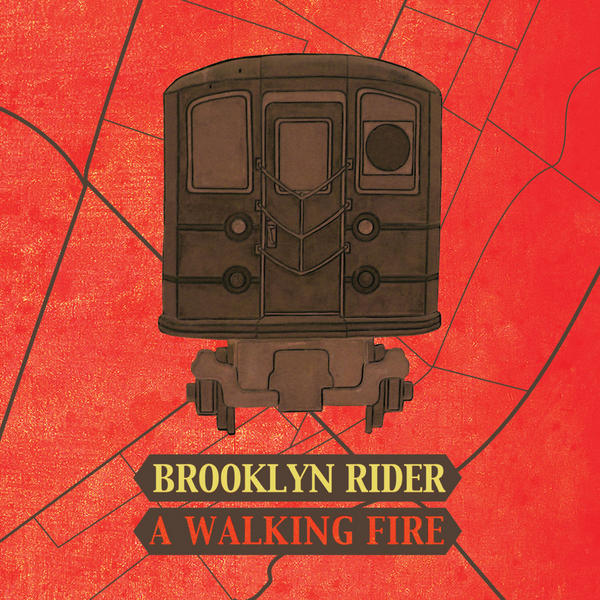
Your assignment is to listen to A Walking Fire, the 2013 release from the string quartet Brooklyn Rider.

You may be shocked, once you’ve listened to this album, by the notion that some classical music listeners would find it difficult. But you’ve got to understand the fundamental difference between the classical side of the music industry and the rest of it: most major classical releases contain no new music. Instead, they feature new interpretations of old (sometimes very old) music that has been recorded before (sometimes hundreds of times).

So, an album like this, where two of the three works presented are premiere recordings by living composers with unfamiliar names, is not entirely conventional. I, for one, wish that it was. Because, recordings like A Walking Fire are way easier to recommend to adventurous non-classical-fans such as yourself than, say, a recording of Mozart’s 40th symphony.

So, what exactly is on this?

The first piece, Culai, is by a Russian-American composer named Ljova, who isn’t enormously well known, in spite of having written for Yo-Yo Ma and the Kronos Quartet. The last piece, Three Miniatures for String Quartet, is by one of Brooklyn Rider’s violinists, Colin Jacobsen. Both of these were written specifically for Brooklyn Rider, and that’s kind of the point of them: they’re custom-made vehicles for the explosive sound of this quartet, which is unlike any other in the world.

The work that’s sandwiched in between them is different in that it’s 100 years old: Béla Bartók’s second string quartet. Ask any string player who the top three quartet composers ever were, and you’ll probably get some permutation of Haydn, Beethoven and Bartók. Mozart and Schubert might enter the conversation soon after. Of those five, Bartók is the most recent by nearly a century.

Part of why I’m giving you this album is because I’m interested in how you’ll react to the Bartók in relation to the newer music. This album demonstrates two different models of classical music: the “futureproof masterpieces” model in the Bartók, and the “music for now” model in the other pieces.

My feeling is always that music need not stand the test of time before it can be dubbed “good.” It’s remarkable how uncommon that opinion is in classical circles, but I suspect I don’t need to justify it to you.

Anyway, the point is: classical music has lots to offer aside from the earnest pursuit of everlasting beauty. It can also be just casually awesome. That’s the kind of classical music that I’m most attracted to these days, and there is plenty of it on A Walking Fire.

I think you’ll find something to like in this. If not, no worries. I’ve got plenty of other potential classical gateway drugs lined up.

— Matthew

Beardyman: live in concert (pt. 1)

beardyman

Dear Matthew:

I’m pleased to hear that you liked Wrong. It fills me with hope.

But, as discussed in real life, we’ll be doing something a little different this week. I know it’s a little early in this blog’s life for a format change, but you had the idea that we should make each other go to some live shows. Mostly I just think you couldn’t convince anyone else to go see Magma with you later this month, but either way, we’re switching it up this week, and this week, you’re coming with me to see Beardyman.

Daren ‘Beardyman’ Foreman is hard to describe; any one term I think of is inadequate on its own. He’s a beatboxer. He’s a mimic. He’s an improviser. He’s a live looper. He’s a producer. He’s got about a million things going on in his head at any one time, and he keeps getting better and better at turning them into music with ever decreasing latency. To this end, he has created a device he calls the Beardytron 5000, and that’s what he’ll be using when we see him play on Wednesday.

The Beardytron 5000 is, essentially, a device for translating the sounds in Foreman’s head into music in as close to real time as possible. It’s a series of iPads and various control surfaces hooked up to a number of computers, and Foreman uses it to sample his voice, and then loop and tweak it in any boundless number of ways. It may look like he’s using prerecorded noises or preset synthesizers up there, but he’s not — it’s all built on his voice.

He’s also hilarious. I expect that this particular performance will be mostly just him making (comparatively) straightforward music, since he’s touring to promote his new album, but at other times his performances are almost closer to standup comedy. A favourite gag of his is to ask the audience to shout out genres and made-up song titles, which he will create on the spot. (His sense of humour is also pitch black, which I’m beginning to realize is a common feature in things I like.)

I’m not sure how much appreciation you have for electronic dance music, but I know you like talented and unique musicians, and there are few musicians more talented or more unique than Beardyman. I hope you enjoy the show.

— Matt

NoMeansNo: Wrong (pt. 1)

wrong

Dear Matthew:

I promised you that this project would involve you listening to some punk rock. The time has come. But fear not — I’m going to ease you into it. This week, you’ll be listening to NoMeansNo‘s seminal 1989 opus, Wrong.

It’s actually kind of hilarious that I’m using the word ‘ease’ in the same paragraph as NoMeansNo; they’re about the most challenging punk rock band I can think of. They’re mathy and jazzy and even sometimes a little proggy — words that are kind of hilarious to find in the same paragraph as ‘punk rock’ — but they’re also thrashy and angry and they infuse everything they do with an absolutely pitch-black sense of humour. So, the way I see it, they’re built on the bedrock of everything that’s great about punk rock, but they approach it with — well, with an approach to the craft that you’ll find more palatable.

At its core, NoMeansNo is the brothers Rob and John Wright, on bass/vocals and drums respectively. The pair from Victoria, BC, though the band is now based in Vancouver. Over the years, guitar and backup vocal duties have been handled by Andy Kerr (as they are on Wrong), and later by Tom Holliston, but unlike most punk rock, the guitar is mostly just flavour; Rob is definitely the frontman, his basslines always the musical main-mast. Live, the three play side by side on stage — with John facing Rob, so the audience gets a good look at John’s playing.

Here’s another thing about NoMeansNo: they’re old. Like, I’m pretty sure they’re older than my dad. That said, they continue to rock harder than any band of their vintage that you care to name, and they’re still putting out good records; 2006’s All Roads Lead to Ausfahrt is in a dead heat with Wrong for my favourite of theirs. I mean, I guess when you’re a band for 36 years, you get pretty good at playing with each other, but these guys all had the chops from the beginning — and they can still shred every lick just as hard as the day it was recorded. In case I haven’t made myself clear: if you get an opportunity to see them play, take it. I only hope I can rock half that hard when I’m that old.

Wrong itself is interesting for a lot of reasons. For one, the title is probably the clearest example of the ‘(W)right’/’wrong’-based wordplay in which in the band frequently engages. Rob was recovering from vocal chord nodules at the time, so it’s atypical in that it features a lot of vocals from then-guitarist Kerr. It’s also probably the best cross-section of the various things the band is capable of musically. There are short, old-school punk rock rippers like ‘Two Lips, Two Lungs and One Tongue’; sludgy, sprawling epics like the album closer ‘I Am Wrong’; and whatever you’d call the madness that is ‘Big Dick’. Wrong is all over the map, and I love it.

If you can’t get into punk rock, then hey, you can’t get into punk rock. I know it’s not for everyone. But for a man of your particular tastes, this is the best possible gateway drug I can think of. If this doesn’t work, I don’t know if anything will.

— Matt

Kate Bush: Hounds of Love (pt. 1)

katebush

Dear Matt:

In honour of this blog having gotten weird already, allow me to introduce you to Kate Bush.

Bush is one of a long line of British artists who constantly gets called “eccentric,” but also periodically enjoys massive mainstream success. (See also, Lewis Carroll, Monty Python, Bush’s occasional duet partner Peter Gabriel.)

I’m at a loss to explain why Kate Bush is popular. But, I do feel like I can pin down part of what makes her connect with her most devoted fans: she possesses a seemingly supernatural amount of empathy.

Bush writes deeply personal songs, but they feel like other people’s personal songs. She’s written lyrics from the POV of Houdini’s wife, a man contemplating fatherhood, and a curiously articulate fetus, among others. These ultra-specific psychological portraits can be alienating, before you find your footing.

Maybe you’ll agree with me that pop music is generally contingent on the listener’s sympathy: you’re meant to identify personally with what’s being sung. That’s why there are so goddamn many love songs. But, Kate Bush’s best songs work differently. They can make you feel empathy for a person to whom you are entirely dissimilar — even if, like me, you don’t normally possess much of that.

I think this is probably why Hounds of Love is Bush’s most beloved album. It’s a mix of genuinely personal songs with some semblance of universality (“Running Up That Hill” became Bush’s second-biggest hit) and tracks that entreat you to work past their alienating strangeness and come to an understanding with their protagonist.

This latter approach comes to the fore on the album’s second side. Much like our perpetual favourite reference point, 2112, one side of Hounds of Love is just a bunch of unrelated songs, and the other side is a sprawling conceptual epic. That epic, subtitled “The Ninth Wave,” is as narratively ambiguous as Deltron 3030, but there’s a nominal throughline involving a woman who (nearly?) drowns following a shipwreck.

I adore this side’s first track, “And Dream of Sheep.” It’s based on the ingenious premise (Kate Bush songs often have “premises”) of relating the inner monologue of a personified lighthouse as it falls asleep and inadvertently causes a tragedy. Of all of Kate Bush’s massive, Wes Andersonian cast of eccentrics and quietly tragic figures, this lighthouse may be my favourite.

But, Bush’s all-time greatest feat of empathy lives on side one: “Cloudbusting” is told from the perspective of a child — the son of dissident scientist Wilhelm Reich. The narrator’s inner monologue seems as alienating to an adult listener as it probably should. And yet we feel for him. “I hid my yo-yo in the garden,” he sings to his imprisoned father, “I can’t hide you from the government.”

Sometimes, manipulating symbols doesn’t affect reality at all.

The album’s sound is of its time. It’s got some badly dated synths, and it’s full of that awful 80s drum sound. But, I don’t care. The songs are strong enough to push through that.

I could go on for thousands of words about all of the reasons why I adore this album. But, ultimately, it comes down to this: Hounds of Love is an album full of feelings. In stark opposition to Bush’s image as an alienating, eccentric figure, Hounds reaches out and makes the effort to connect.

I have no idea whether or not it’ll connect with you. I hope so. I hope it knocks that impassive facade of yours clean off. I want to see waterworks, Meuse.

But, either way, this is what all the fuss is about. Now you know.

— Matthew

Deltron 3030: Deltron 3030 (pt. 1)

deltron3030

Dear Matthew:

Last week, you had me listen to some goofy, epic, over-the-top prog rock. In that spirit, your first assignment is probably the closest thing the hip hop canon has to prog: Deltron 3030.

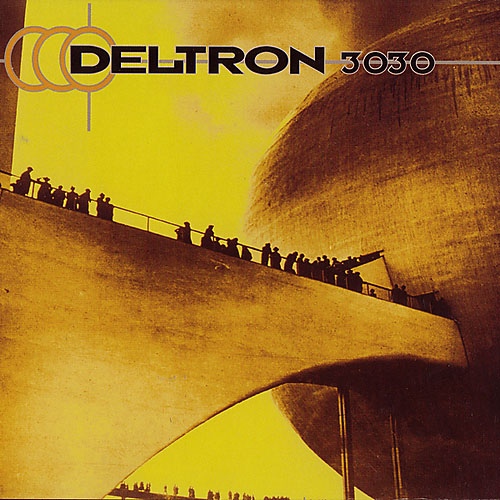
Deltron 3030 is a supergroup consisting of MC Del the Funky Homosapien, producer Dan the Automator — both hailing from the San Francisco Bay Area — and DJ Kid Koala, from Vancouver. They’re all prolific and celebrated in their own niches, but this record is, in my opinion, the best distillation of everything the three bring to the table. Remember Gorillaz’ first single, ‘Clint Eastwood’? That’s these three guys plus Damon Albarn, a year after Deltron 3030 came out. (As far as I’m concerned, ‘Clint Eastwood’ is a Deltron 3030 song. Hell, they even do it as their encore when they play live.)

Deltron 3030 is a concept album. The year is 3030, and times are tough for Deltron Zero and his sidekick Automator. Hip hop is outlawed, corporations rule the galaxy with an iron fist, and Deltron is on the run from a corrupt military-industrial complex — or at least that’s been my interpretation. Unlike a more classic concept album like Rush’s 2112, Deltron 3030 doesn’t have a clearly defined narrative arc. Instead, it’s more of an exercise in atmosphere and world-building. There are some set pieces here and there, but a lot of it is just Del — an MC renowned for his ability to freestyle — riffing on post-apocalyptic sci-fi imagery and technobabble over Automator’s gritty, stripped-down beats. (It may interest you to note that Dan is a classically trained violinist, and many of the samples on this record come from the music of contemporary classical composer William Sheller.)

The result is utterly captivating. There is no other rapper in the world who sounds like Del. And more than anything, this record really seems to capture this feeling of the ‘used future’ of something like Star Wars or Alien — a future that feels dirty and diseased, run-down and as far from the shiny idealism of Star Trek as it’s possible to get. The universe of Deltron 3030 is in rough shape.

This album is very much a product of its time, of course. The various skits and vocal cameos are a who’s-who of 90s alternative hip hop. Released in the year 2000, it shares a cultural moment with other similar sci-fi classics like The Matrix, The X-Files, and even Final Fantasy VII. It definitely feels like an album that came out in 2000 — but in a good way. It has aged extremely well (how scarily prescient is the track ‘Virus’?), and I think a lot of that has to do with how it just sort of sprung into the world fully formed. Like a lot of cult classics, there wasn’t a lot of hype when it first came out, and it’s only in the following years that it amassed its legion of fans. (In 2013, the band released a long-awaited followup, Event II — which is a good album too, don’t get me wrong. But unless you’re Death From Above 1979, it’s hard to get that sort of lighting to strike twice.)

Obviously, I love Deltron 3030. And I know you have a taste for MF DOOM and Madlib’s Madvillainy, so I think you might too. I am very much looking forward to your thoughts on this album.

— Matt

Van der Graaf Generator: Godbluff (pt. 1)

godbluff

Dear Matt:

So, here we are. The first stop on our Matts-ical Mystery Tour of Mattvillainy. I’ve chosen your inaugural assignment as a sort of mission statement for my half of this project. As you know, when I’m not living in the 19th century, my tastes tend strongly towards the more ambitious and grandiloquent music from the years of about… oh, let’s say 1965–1979. So, you’re probably going to be getting a lot of art rock, ropey old psychedelia, and classic prog — with frequent dalliances into more unexpected territory.

With that in mind, this week you’ll be listening to Van der Graaf Generator’s Godbluff.

This is not an orthodox prog recommendation. I could have given you Yes; I could have given you Rush. These are bands who are seemingly more central to most prog fans’ musical experience than Van der Graaf Generator is. But, because of that, they are also the bands who most closely adhere to some of prog’s more ludicrous tropes – the extended solos; the circuitous, fantastical lyrics… After all, Yes and Rush are among the bands most responsible for those tropes.

So, it’s all too easy to hear popular opinion bubbling away beneath the surface when you listen to these bands. (Even for me, and I adore them both – along with Genesis, ELP, Gentle Giant, King Crimson, etc.) I’m hoping that by assigning you something a small ways off the beaten path, I might be giving you a chance to see past the tropes and hear the music on its own terms.

Van der Graaf Generator, especially in this period of their development, was the rawest and most energetic of the major classic prog bands. Their singer, Peter Hammill, shrieks and grunts as much as he sings. He’s accompanied by a jazz drummer, a guy who built his own organ (though that’s not the one he plays here), and a man who cannot play the saxophone but does anyway. Godbluff is loud, shouty, and lean (at only 37:29). But, it’s also bombastic, dramatic, and more than a little bit camp. So, it has the potential to alienate prog fans and prog non-fans alike. Needless to say, I love it unambiguously.

I almost hope you hate it. I almost hope that, because it could make for more interesting reading – but also because the thing that attracted me to this idea in the first place was the opportunity for my rapidly calcifying musical tastes to be expanded and called into question. And that doesn’t just mean hearing a bunch of new, unfamiliar music. That means having my deeply-held musical value system come crashing into your entirely different deeply-held musical value system.

So, be truthful. Be forthright. And, Matt, don’t disappoint me.

— Matthew