
Unknown's avatar

About Matt

Hi! I like shorts! They're comfy and easy to wear!

M.I.A.: Kala (pt. 1)

Kala

Dear Matthew:

If you’ll recall, I once posited on this blog that Kate Bush was the Seinfeld of female art-pop stars. (New readers: in context, this is more flattering than it sounds. I promise.) When I talked about the modern female art-pop stars she influenced, I mentioned Björk and Fever Ray, but mostly I was thinking of M.I.A. This week, you’ll be listening to her album Kala.

Mathangi ‘Maya’ Arulpragasam — get it? M.I.A.? — is a British-born Tamil who grew up in Sri Lanka during the outbreak of civil war, something that has underscored much of her artistic career. She makes a chaotic sort of electro rap pop type of music that is often highly political in nature. She also draws on many other genres from around the world, from dancehall to baile funk to Bollywood film scores. A trained visual artist, she’s also known for the striking visual elements of her music, including videos, fashion and art. Combine all of these traits, and you have someone almost destined to get huge if she happened to be around at the advent of the digital music revolution. And hey, guess what?

Her first album, Arular (named for her father, a prominent member of a militant group called EROS), caught the ears of all the hip music bloggers when it came out in 2005, right around when music bloggers were starting to become a thing. But it wasn’t until Kala (named for her mother) that she really blew up, and blow up she did — you are hopefully at least passingly familiar with the Clash-sampling mega-hit ‘Paper Planes‘. Kala is also when she first teamed up with producer Switch, and also features further collaborations with Diplo, who was still relatively unknown at the time (and also her boyfriend). In contrast to the comparatively stark beats of her bedroom-produced debut, it’s a lush, worldly collage of sounds — owing to the fact that it was literally recorded around the world. It’s a bombastic, idiosyncratic, in-your-face record, and it solidified her place in the pantheon of internet pop stars. It was probably about as successful as you could ever ask a ‘difficult sophomore album’ to be.

I’ll be honest: Kala is not my favourite M.I.A. album*. But this assignment isn’t about listening to her ‘best’ album — this is about the context. I want to hear your thoughts on one of the first big albums of the digital era, an album that arguably couldn’t have been made in any other era. I want you to really dig into Kala‘s mashup aesthetic. I want you to see how many musical allusions, references and samples you can identify in its sonic collage, and to know how you feel about them. And, of course, I want to know if my Kate Bush analogy is grounded in any sort of reality.

M.I.A. isn’t for everyone. She’s about as subtle as a landmine, and her politics certainly rub a lot of people the wrong way. But her music is like nothing else out there, and that’s more than most can say. Even if you don’t love it, I hope you at least find it interesting.

— Matt

* For the longest time that was Arular, but it’s been recently supplanted by the extremely good Matangi. I’ve warmed up a lot to /\/\ /\ Y /\ over the years, too. In fact, now that I think about it, Kala might actually be my least favourite M.I.A. album. But again! Not the point.

Jethro Tull: Thick as a Brick (pt. 2)

TAAB

Dear Matthew:

A mutual friend of ours, Syrup Trap editor Nick Zarzycki, once made an observation that has really stuck with me: he argued that the best comedic films, at least in terms of laughs per minute and broad popular acclaim, are almost always parodies.

I think he’s probably on to something. If you take a look around the internet for what people think are the best comedies of all time, Airplane!, Life of Brian, Blazing Saddles and their ilk are usually in the mix, and pretty near the top, too. And when I think of it, a lot of my more modern favourites are very much in the same mold — Hot Rod and They Came Together and Kiss Kiss Bang Bang are some that spring immediately to mind, and there are definitely others.

If you think about it, it makes a lot of sense. Genre spoofs work well because the audience knows the material — you don’t have to do a lot of world-building or characterization, because you’ve already got a whole box of tropes and archetypes to work with. Since they’re spoofs of whole genres, they tend to age reasonably well, unlike spoofs of specific films — compare the staying power of the aforementioned Blazing Saddles with that of, say, Spaceballs.

The other thing about movies like this is that they tend to rate very highly with self-proclaimed ‘comedy aficionados’*. I think this is because, unlike a wholly original film, the story doesn’t really matter; in a genre parody, the plot is basically just a vehicle for jokes. In a way, the genre parody allows for filmic comedy in its purest form, because you aren’t writing anything that isn’t either the setup for, or the punchline to, a joke. You don’t have to sell the audience on a complicated story or complex characters — it’s just all jokes all the time.

I think a similar effect is probably why Thick as a Brick works so well. But the thing about TAAB is that it’s almost too good of a parody. Let me explain what I mean.

To reference Mel Brooks for the third and hopefully last time this article, TAAB suffers from a sort of reverse Springtime for Hitler effect. It’s intended to be a spoof of all of the most ridiculous aspects of prog, but in doing so, it embodies them so well that I, an admitted prog neophyte, would be hard-pressed to pick this out as a parody on first listen if I didn’t already know. It would be very easy for the less studious listener to mistake it for a completely serious endeavour — and indeed, some background reading on the album suggests that many did and still do.

The extremely dangerous internet time-sink TV Tropes refers to this effect as Poe’s Law. The law, roughly stated, is that parodies of extreme ideas/things are often mistaken as being sincere, and that sincere expressions of extreme ideas/things are often mistaken as parody — and paradoxically, the more extreme the idea/thing is, the more likely the confusion. This is why you get people who think that Stephen Colbert is actually a hardcore right-wing pundit, why people still think that Jonathan Swift actually condoned eating the Irish, why the Yes Men are able to get away with as much as they do, and one of the many reasons why LiarTownUSA is possibly the best thing to happen to Tumblr.

So, while I certainly got a kick out of the record, I expect my experience was similar to that of yours with Mr. Oizo — which is to say that I get it, but without a more deepseated love for the material being satirized, I don’t know that I’ll ever truly appreciate it on the level that you do. In my defence, it’s a pretty tall order to appreciate TAAB on the level that you do, but I’m still sorry to let you down.

But for what it’s worth, I did very much enjoy this pondering of the nature of parody that TAAB inspired. That, and the album sleeve is outstanding.

— Matt

* These people are the worst.

Mr. Oizo: Lambs Anger (pt. 1)

lambsanger

Dear Matthew:

Sorry for a third straight week of bleeps and bloops, but bear with me — this one is somewhat time-sensitive.

This is another multi-part assignment. But don’t worry — the parts are pretty small. The first part of the assignment is to watch this:

That’s the opening scene of a 2010 film called Rubber. It’s about a tire that comes to life and starts killing people with its mind. It was written and directed by French filmmaker Quentin Dupieux, and it’s a better summary of his approach to art than I could ever hope to write myself. You see, in addition to making films, he also makes music under the name Mr. Oizo (pronounced ‘oiseau’, as in the French word for bird), and this week you’ll be listening to his 2008 album Lambs Anger.

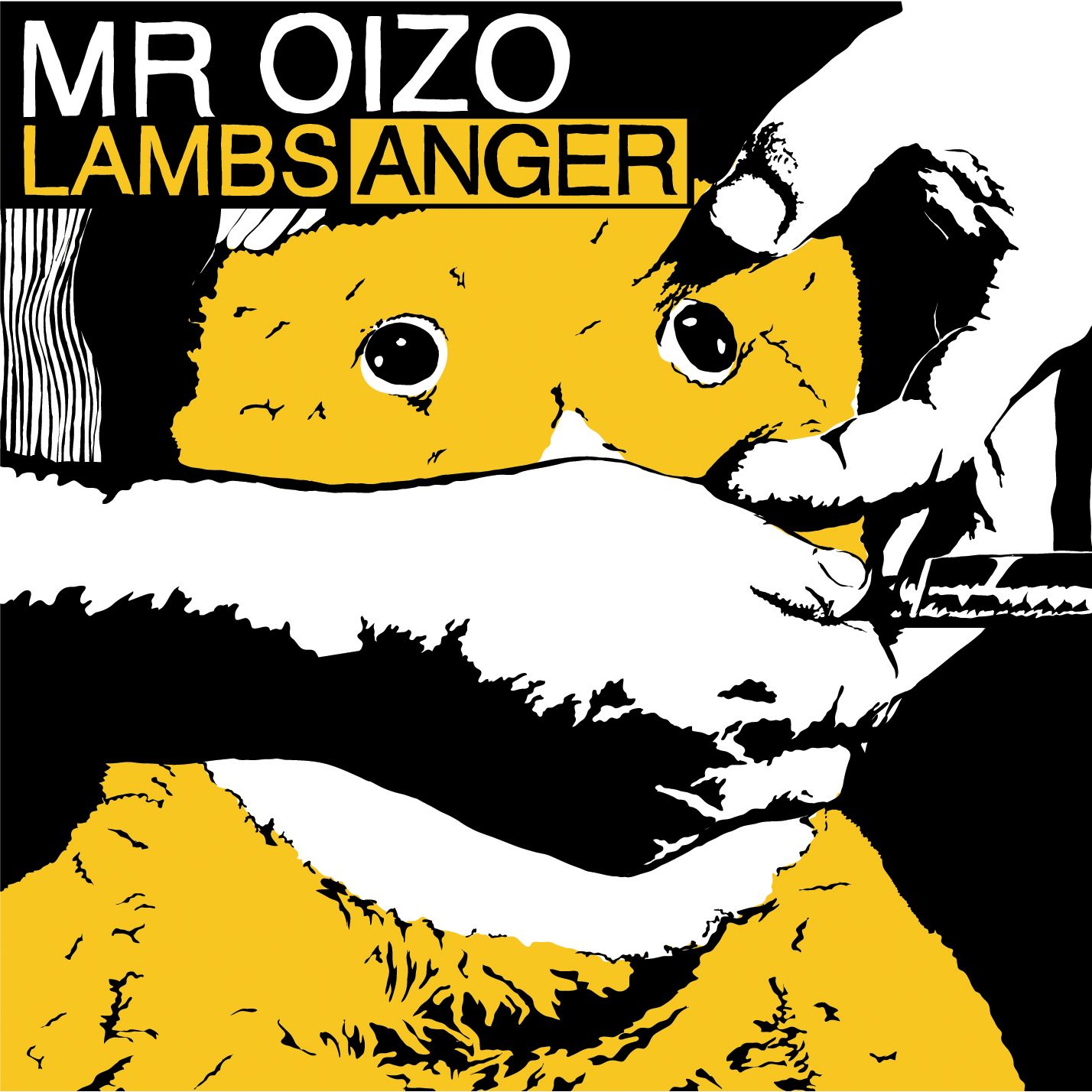
If the Rubber clip and the blatant Luis Buñuel reference weren’t enough to spell it out, Dupieux deals heavily in the absurd and the surreal. His only real ‘hit’ was the 1999 track ‘Flat Beat’ — the video, directed by Dupieux, features the yellow puppet and de facto Oizo mascot Flat Eric, who graces the cover of Lambs Anger. Dupieux eventually fell in with the Ed Banger crew, a French record label and loose collective of electro producers who rose to prominence in the mid-2000s (mostly on the backs of the band Justice). His early music was already pretty left-field, but when he joined the Ed Banger roster, his sound shifted noticeably toward more club-friendly four-to-the-floor electro sounds — but his surreal sensibilities became even more pronounced.

That’s what’s so fascinating about Dupieux as a producer: he really does know how to make good dance music, but it’s always done with his tongue planted so firmly in his cheek its a wonder he can still talk. His entire career, especially since joining Ed Banger, has essentially been about taking the piss out of the genre and its fanswhile still producing outstanding examples of it. His production is ridiculous to the point that it feels like he’s playing a game of chicken with the scene, seeing how far he can go and still have people call it dance music. (I love it, obviously.)

Lambs Anger is Dupieux’s first full-length release on Ed Banger, and it’s probably the best jumping-off point for really getting into the Mr. Oizo headspace. Like his films, his music has a very strong sense of continuity to it — a canon, even. Repeated phrases and hooks, synthesized speech, Uffie, some of the most obnoxious techno music you’ve ever heard — Lambs Anger has it all. It even manages at times to actually be pretty listenable. It’s even got that rarest of rarities: a good hip-hop cover. This is peak Oizo.

I’m not going to lie: this is going to be a challenging listen for you, especially given what I know of your opinion of electronic dance music. But given what I know of your taste in art more generally, I think you’ll at least be able to appreciate the ethic with which Dupieux is approaching the genre. He’s making a new pair of clothes for the emperors of EDM. He’s drawing a musical moustache on the Mona Lisa. He’s the DJ of Dada.

Why?

No reason.

— Matt

PS: I almost forgot the third part of your assignment! After you’ve listened to the album, head on over to http://oizo3000.com, and just experience it. If you enjoyed Lambs Anger, great! You can download his EP Stade 3 for free from the website, and it’s a good next step. If not, poke around the website anyway — according to his Twitter, he’ll be shutting the website down for good soon. It’s a damn shame.

PPS: Even if the music doesn’t speak to you in the slightest, you might still enjoy his films. The aforementioned Rubber is a good start. If the music does speak to you, Id suggest checking out Wrong Cops at your earliest convenience.

King Crimson: Red (pt. 2)

red

Dear Matthew:

Okay, maybe there is something to this prog stuff after all.

Don’t get too excited. I wasn’t blown away like I was by the Baroque accordions. I wasn’t nailed to my seat like I was by Brian Eno. In fact, ‘Red’ and ‘One More Red Nightmare’ are the only two songs I was really, really into. But hey, baby steps, right?

If this album is any indication, I can definitely see why you suspect that NoMeansNo are King Crimson fans. Indeed, if you like the song ‘Red’, I suggest you immediately check out some of the proggier NoMeansNo, like Why Do They Call Me Mr. Happy? One of my favourite things about this project has been discovering the foundations, or in some cases, what are essentially early versions of more modern music that I love, and I can certainly see why ‘influential’ is one of the most popular adjectives used to describe King Crimson.

You might be onto something with intuitive appreciation of music. I mean, I try to have an open mind, but realistically, I usually know if I’m going to like a song with the first few seconds — or if I’m going to really like it, anyway. To use a crude metaphor, it’s a bit like sex appeal: you usually know right away if you’re attracted to someone, but it’s often hard to pick out a specific reason why. It’s intuitive. And sure, there are people you warm up to over time, but with the most compelling people, it’s instantaneous.

So there’s definitely a lizard-brain level of liking music, but I’m becoming increasingly aware of how much a band’s — to use a word that accurately conveys the idea I’m talking about but makes me want to throw up a little — brand affects how much people like them. Maybe a big part of why I could never get into prog was all of the pretense — the stuff you pointed out that King Crimson doesn’t do. Would I have liked them as much if I’d gone into the album not knowing that? I’d like to think so, but you never know. (In my own defense, I can usually put aside ‘brand’ considerations once I hear the actual music itself; generally the most it does is keep me from listening in the first place.)

One last thought: in terms of contemporary bands, your description of how the band as a Fripp-powered engine that looks completely different every time it’s reassembled reminds me a lot of Gorillaz. Gorillaz is, at its core, a Damon Albarn solo project with art design by Jamie Hewlett, but it features so many guest musicians and producers that every album almost sounds like a different band. Dan the Automator’s influence is all over the self-titled record, and Danger Mouse is definitely on display on Demon Days. (I believe Plastic Beach is produced by Albarn himself.) In fact, now that I think of it, this sort of band is actually pretty common, if not quite to the same extent: Nine Inch Nails is Trent Reznor, LCD Soundsystem is James Murphy, Queens of the Stone Age is Josh Homme, etc.

Anyway, congratulations — I didn’t completely hate a prog album!

— Matt

The Micronauts: Bleep to Bleep (pt. 1)

bleeptobleep Dear Matthew:

Since we’re talking about minimalism, I have some more bleeps and bloops for you — literally.

Though the Micronauts is now just one guy (Frenchman Christophe Monier), it was a two-piece (Quebecker George Issakidis) when they recorded one of the most strangely compelling electronic albums I’ve ever heard: Bleep to Bleep. It’s like they set out to make a nice little techno jam to play at their next rave, but just didn’t stop. The album is literally just the same song for 45 minutes. (Or, to be more specific, four takes of the same song, broken up with two noisy interludes.)

That sounds like it would be awful, but the repetition becomes the most fascinating feature of the album. The definition of minimalism that you gave me last week was ‘small amounts of musical material animated by obvious patterns’, and it describes the Micronauts perfectly. Monier and Issakidis are indeed working with an extremely limited palette — a drum machine, some very basic synthesizers, a sample of some strings and a smattering of miscellaneous percussion — and for 45 minutes, they build up an arrangement, then disassemble it, then rebuild it in a slightly different way, then take it apart again, tweak it, put it back together… they build and destroy, build and destroy, build and destroy for three quarters of an hour. It’s the same song throughout, and yet it’s never the same song for more than a few minutes at a time. It’s the musical equivalent of the Ship of Theseus. It’s riveting.

Keep in mind, too, that this was the late ’90s, so they’re working with the real deal here — they’re using actual synths and samplers and drum machines, they’re not just some kids messing around with Garage Band for an afternoon. So this is also a fascinating album if you’re at all interested in the technical aspect of electronic music production, especially before the era of the laptop DJ.

Now, this is definitely some straight-up ravey acid techno bullshit. Given your reaction to the dance music you’ve encountered so far over the course of this project, I’m not sure how you’ll react to it. It’s entirely possible that you’ll hate this album. Worse yet, you might be completely indifferent to it. But all I know is, I find this album totally captivating. And since you’re into a guy who makes music by looping slightly-out-of-phase recordings and swinging microphones over speaker cones, hopefully you will too.

— Matt

PS: After you give Bleep to Bleep a spin, it’s worth checking out the single that was released from the album — essentially, the entire album distilled into something you can play on the radio. It’s called ‘Baby Wants to Rock’, and its running time? Three minutes and 19 seconds.

Michael Nyman & Motion Trio: Acoustic Accordians (pt. 2)

Acoustic Accordions

Dear Matthew:

This is good shit.

Seriously, I enjoyed this album way more than I thought I would. I mean, I didn’t think I wouldn’t like it, but I didn’t expect to be totally floored by it, either. Where I’m having trouble, though, is quantifying exactly why.

Maybe it’s the Baroqueness. I’m not a hugely informed classical listener, as you know, but Baroque stuff has always been my favourite. Of the ‘rock stars’ of the classical pantheon, Bach has always been the one I’m most into. When I took piano lessons as a kid, my favourite pieces to play were always from List A — the Baroque repertoire. This is even reflected in a lot of the modern acts I’m into — Ratatat and Justice both smack of this stuff, and it’s my favourite feature of their music. I also like a lot of music that is definitely influenced by minimalism — Daft Punk spring immediately to mind, but there are certainly others.

Maybe it’s the playing of Baroque music on instruments other than what I’m used to hearing Baroque music on. An epiphany I’ve had over the course of writing this blog is that one thing I’m really into in music is recontextualization — I love picking out samples, I enjoy clever and unexpected mashups entirely too much, and I have enormous respect for good DJs (there aren’t many). I love music that takes something familiar and twists it in an unexpected way. That’s certainly what’s going on here. It reminds me of what little Wendy Carlos I’ve heard. (Mostly just the A Clockwork Orange soundtrack. But apparently she and Weird Al did an interpretation of Peter and the Wolf, and I now desperately want to hear it.)

But what specifically is it about Baroque music that’s so compelling? Why am I so into it? What is the source of its driving rhythm and energy? What magical switches is it flipping in my brain with its complex, mathy harmonies and incredibly satisfying modulations and resolutions? I’m seriously asking. I’ve heard about Mozart’s brilliance and Beethoven’s intensity and whatever else, but I’ve never gotten a satisfactory answer to a question that I didn’t realize was bothering me so much until I sat down to write this: Why is Bach so damn good?

Also: while listening to the bonus Michael Nyman Band piece from The Cook, the Thief, His Wife & Her Lover I couldn’t shake the mental image of the cartoon characters in Victorian garb trying to be inconspicuous in a funeral procession. I am confident that it improved the listening experience significantly.

— Matt

Amon Tobin: ISAM (pt. 1)

isam

Dear Matthew:

I feel as though we should move directly into the bleeps and bloops at this point.

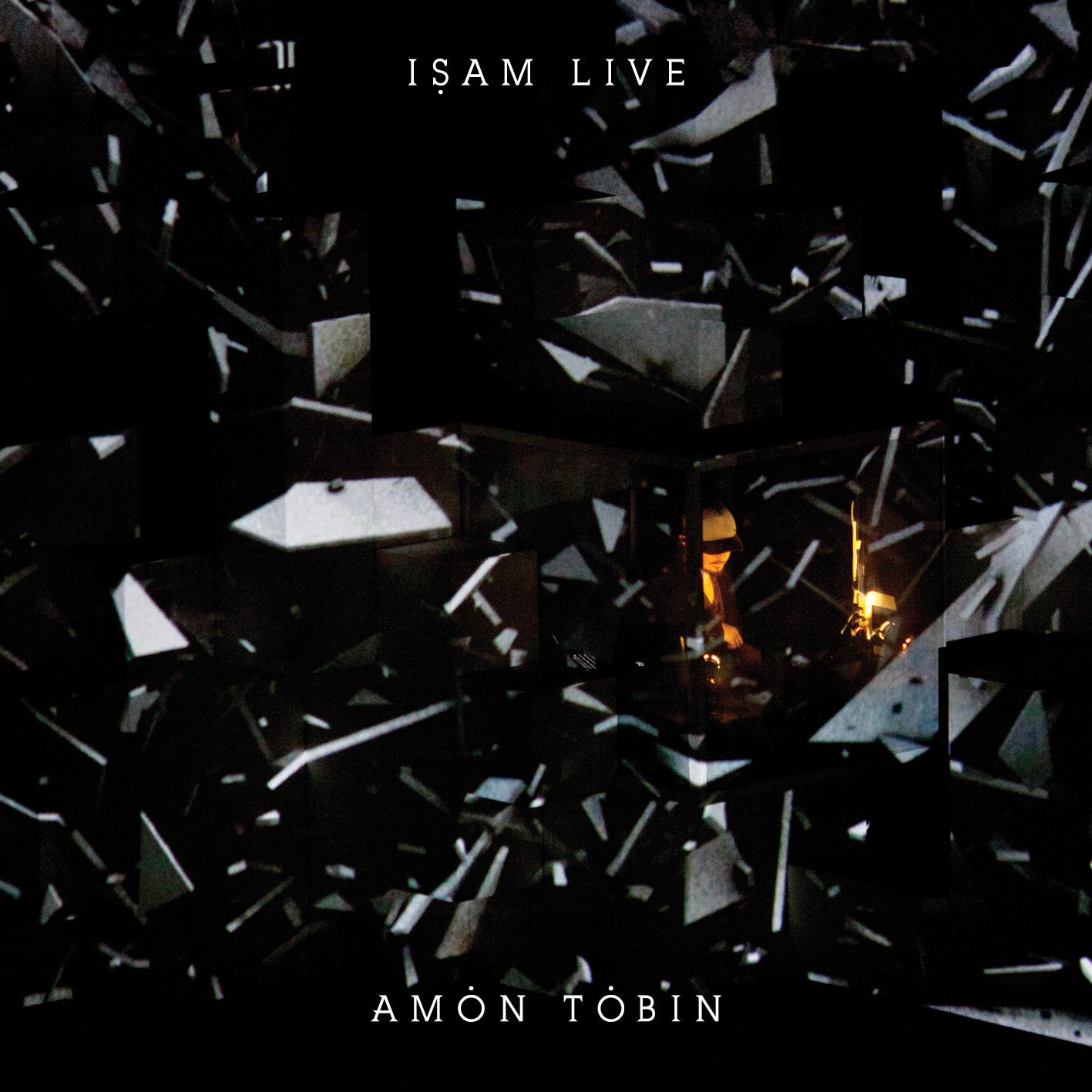
Amon Tobin is one of my favourite musicians maybe ever. He got his start in the 90s as part of that wave of chilled-out British drum and bass that formed the entire soundtrack of shows like Spaced, a sound that his label Ninja Tune (with whom he is still signed) practically invented. He worked with samples, usually of old jazz records, cut up and mashed together to create new songs altogether. After a few records like this, however, Tobin began to get bored, and started going increasingly further afield when sourcing his samples, twisting and processing them further and further beyond recognition. His sound started to get darker, bigger, and crunchier. Then, like Eno before him, he started getting conceptual. He started doing soundtracks. He did an album where he recorded all of the samples himself. And then, in 2011, he released an album created entirely with synthesizers he created himself digitally — many based, of course, on his own field recordings. The album was called ISAM (Invented Sounds Applied to Music), and that’s what you’ll be listening to this week.

ISAM is incredibly ambitious. The aural palette Tobin creates for himself is absolutely massive, and the range of emotions he’s able to evoke with it is equally broad. ISAM is bombastic, haunting, ponderous, playful, and everything in between. Some tracks are more like experimental sound design than anything you could reasonably call music. It sounds nothing like any of his previous work, and yet it’s still unmistakably his work. It was never going to be a crowdpleaser, but if people are still talking about Tobin in twenty years, my money is on this album being why.

Now, when you release a new record, your label usually wants you to go on tour to support it. But what do you do when you make electronic music that is, for the most part, completely impossible to dance to? In the 90s, Tobin’s solution was to learn to DJ so he could play music that people actually would dance to, and he soon started pushing technological boundaries there, too. (He was one of the first big names to embrace vinyl emulation software like Serato, which is now industry standard.) But ISAM was such a completely different beast that touring it that way just didn’t make sense.

So, he didn’t.

isamlive

Surprise! This week’s assignment is a double bill. After you listen to the studio version of ISAM, you’re going to be watching a film of ISAM Live, the show Tobin and a team of engineers, artists and programmers created to tour it.

I’ve always found live electronic music to present an interesting dilemma. A lot of producers start off as DJs, so their live show usually follows that sort of spontaneous, semi-improvised format. But when your music isn’t designed for the dancefloor and you can’t feasibly recreate it live, how are you supposed to perform it? Do you just sit down on stage in front of your laptop and press play? Daft Punk seem to have found the answer in 2006, which I’ve written about elsewhere: you create an arena-sized audiovisual experience. But, when you do that, you have to plan everything out in advance, and if you’re a DJ, that makes you nervous. So there’s this interesting sort of cognitive dissonance you have to navigate within the scene, and you can get a lot of grief if people think you’re doing it ‘wrong’.

I will state unequivocally that, for my money, Amon Tobin is the greatest DJ in the universe. But ISAM Live is about as far from live DJing as you can get. The set is a blocky expanse of cubes covered in techy, psychedelic projection-mapped video, and Tobin is up there in his control pod pressing buttons that are presumably connected to something, but when you get right down to it, you’re not watching something spontaneous — you’re watching a tightly rehearsed performance. This might not seem strange to someone with your background, but remember that most electronic musicians start as DJs, so for them, this approach is highly counterintuitive. With ISAM Live, Tobin was at the forefront of a new take on live electronic music, one the broader scene still hasn’t quite wrapped its head around.

I’ve already written a lot, so at this point I should probably shut up and let the music (and video) speak for itself. I am extremely interested to hear what you make of all this.

— Matt

PS: ISAM Live includes the first encore from the performance, but both times I saw it (shut up, he toured with a beefed up version of the show a year later), he did a short DJ set as a second encore afterward. And, since I did claim earlier that he is the greatest DJ in the universe, I’m also going to have you listen to that second encore from the second version of the ISAM Live tour, which was released as a free download. It’s got stuff from other artists, but it’s mostly tracks by Two Fingers, a side project of Tobin’s where he takes all of the insane stuff he does in his solo career, like building a bunch of digital synthesizers from scratch, and makes straightup dancefloor devastators with it. God, I love Amon Tobin.

PPS: Check out the original artwork for ISAM. Like the final artwork and the artwork for the single ‘Surge’, it comes from an installation by visual artist Tessa Farmer called Control Over Nature, created specifically for the album. God, I love Amon Tobin.

Brian Eno: Another Green World (pt. 2)

Eno

Dear Matthew:

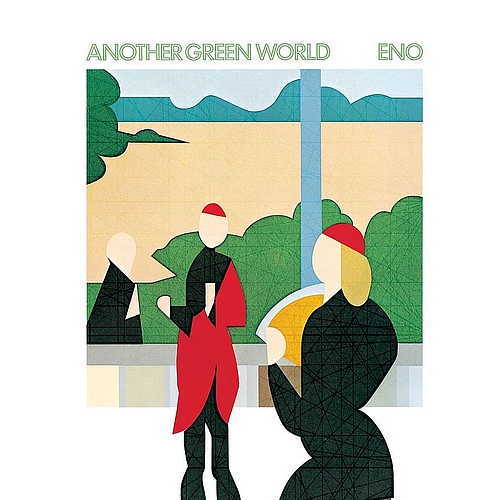
This is a really cool album.

I mean, I know who Brian Eno is — he’s that guy who did all those albums that Music People like. But, apart from a cursory listen to Here Come the Warm Jets a few years ago, I don’t really have any experience with his music firsthand, unless you count my ongoing love affair with ‘Once in a Lifetime‘. That reputation always kind of preceded him, and I always figured he’d just be too arty for me, or something.

But, digging into this album, what I immediately noticed was what you meant by the album’s agelessness. I listened to the 2004 remaster, which probably helps, but you’re right — you could’ve told me that this came out last year and I would’ve believed you. Eno was unbelievably ahead of the curve, especially given what you’ve told me about his working methods. In his attempts to be more a sort of curator of sound than a musician himself, he set the mold for the careers of any number of modern producers who, in your phraseology, play people rather than instruments. Your new friend Dan the Automator springs to mind as a particularly apt example of this approach to music production.

I’m also reminded of the Kate Bush album you had me listen to, in that I’m seeing all kinds of groundwork for modern music I’m already really into. Acts like Amon Tobin, Four Tet, Sigur Rós, and even arguably guys like Flying Lotus or J Dilla — they’ve built entire careers on the foundation provided by tracks like ‘Sky Saw’ and ‘In Dark Trees’. Most of these guys work primarily with samples rather than live musicians, but I think that means the Eno paradigm actually applies even more.

(‘In Dark Trees’ actually gave me the most incredible feeling of déjà vu when it came on, although I soon realized that’s because it appears in Electroma, Daft Punk’s 2006 arthouse film about two robots who want to become human.)

My only complaint about this album is that a lot of the songs seem … unfinished. A lot of tracks — usually the shorter ones, but not exclusively — feel more like demos than like polished final versions. Maybe it’s because I’m used to modern guys like the Chemical Brothers who will take a good musical idea and run it into the ground for twelve minutes at a time, but a good two thirds of the songs on this album feel like they end too soon. I feel like I’m just starting to sink my teeth into them, and then they stop. That’s actually probably the giveaway for dating this album: had it come out last year, it would probably be at least an hour long.

Anyway, congratulations. I think you’ve found your first album to hook me the same way Deltron 3030 and Wrong hooked you. Now! To sit back and wait for it to spring to mind unbidden.

— Matt

Belle and Sebastian: The Life Pursuit (pt. 1)

belleandsebastian

Dear Matthew:

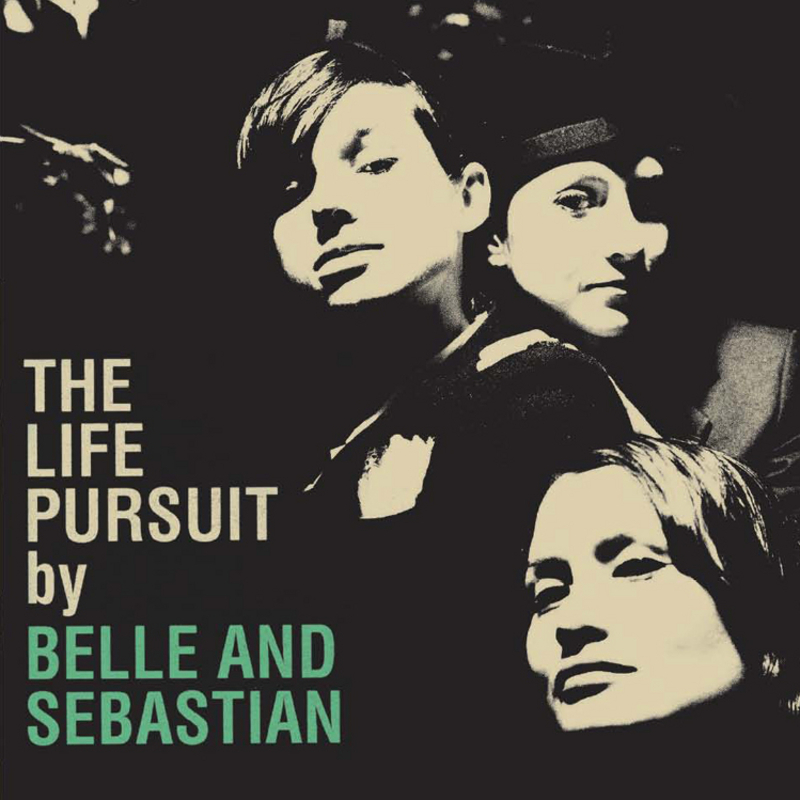
How do you feel about Feelings? Because it has come to my attention since my last post that you’ve never listened to any Belle and Sebastian.

You may recall that I have previously described the Glaswegian indie pop legends as one of the staple bands mopey college kids were listening to in the mid 2000s. Along with Rilo Kiley, LCD Soundsystem, Bright Eyes, Tegan and Sara, etc., these guys were the bread and butter of a particular variety of melancholy music nerd when I was finishing high school/starting university — I know you know the type. Belle and Sebastian are more than a little twee, and the word ‘wistful’ seems to have been invented specifically to describe both the lyrics and delivery of frontman and main songwriter Stuart Murdoch — who, as previously discussed, may in fact be some sort of ageless time traveller who has been making pop music in Great Britain since the ’60s. Belle and Sebastian is a band that runs entirely on nostalgia and hooks. I love them, obviously.

The hardest part of this assignment has been deciding which album to start you out with. Most B&S diehards will tell you that their second album, 1996’s If You’re Feeling Sinister, is their undisputed masterpiece, and that you should start there. That’s what I did initially, though, and I wasn’t exactly blown away. I filed them away as one of those bands that other people love fanatically that I just don’t ‘get,’ like the Smiths or Bob Marley. It wasn’t until I gave 2006’s The Life Pursuit a spin that I really got hooked. It’s a much peppier, catchier, less despondent, more energetic, more radio-friendly affair than — well, than any of their previous records, really, while still being undeniably a Belle and Sebastian record. Sure, it doesn’t have any ‘classics’ like ‘The Boy With the Arab Strap‘ or ‘I’m a Cuckoo,’ and the first track is a bit of a slow burner compared to the tremendous numbers that start their two most recent albums. But if I was going to list what it has got, I would just end up writing out most of the track list. This is a very easy album to like, and I want you to like this band.

This brings up an interesting question about ‘getting into’ bands with big catalogues and huge fanbases that I’ve struggled with for a while. Most such bands do have a particular album commonly agreed upon as their magnum opus that most fans will point you toward: Daft Punk has Discovery, the Beach Boys have Pet Sounds, Pink Floyd has The Dark Side of the Moon, etc. But as often as not, a band’s so-called ‘classic’ album doesn’t end up being the one that hooks me. I didn’t get into Tegan and Sara until I listened to Sainthood and I didn’t get into Rilo Kiley until I listened to Under the Blacklight, which to ardent fans of those bands is kind of like saying I didn’t get into Talking Heads until I listened to … I don’t know, any album that isn’t Remain in Light. It’s ass-backwards from the conventional wisdom, is what I’m saying — and also what I’m assigning you here. So we’ll see how it goes.

So, like many a white kid before you, let these pop hooks and pleasing chord progressions grab you and pull you into a world of utterly enjoyable despair. Really get some catharsis happening. And try to make it last, because two weeks from now, you are going to be listening to some of the most insane bleep-bloop electronic bullshit I know.

—Matt

The Zombies: Odessey and Oracle (pt. 2)

zombiesodyssey

Dear Matthew:

A few short hours after the Magma show, I left Vancouver for a few days. (Not related. Honest.) I returned yesterday evening, and made my way almost immediately to the Vogue Theatre downtown to see my favourite sad-guy band, Belle and Sebastian. It was an excellent show. I woke up this morning, loaded up Odessey and Oracle onto my phone and went out for a walk down toward the beach — and when I pressed play, I was hit with one of the most intense feelings of déjà vu I have experienced in recent memory.

Seriously, the resemblance is uncanny. I mean, I knew Belle and Sebastian had a certain wistful nostalgia, but I didn’t realize just how deep it ran. I expect you could probably take someone who hadn’t heard anything by either band and play them a selection of either band’s work and they wouldn’t be much better than random chance at guessing which band it is. In fact, I’m still grappling with the possibility that Stuart Murdoch is actually some sort of Dorian Grey-esque being who just hasn’t stopped making pop music since the ’60s. (Seriously, tell me ‘I’m a Cuckoo‘ doesn’t sound like a b-side from Odessey.)

I am exaggerating for comedic effect, of course. The Zombies are much more blissed out than Murdoch and company, which is the main reason I don’t think I’ll ever like them as much. The sense of wisftulness that permeates even the peppiest B&S tunes is the secret sauce, as is the case with most of their sad-guy contemporaries — Rilo Kiley, Bloc Party, LCD Soundsystem, and all of those other bands mopey college kids were listening to in the mid 2000s. To make a lazy comparison, this is Belle and Sebastian on Prozac. You’re right, though — this is music scientifically designed to release endorphins. It was perfect for a sunny walk along the bay. (Of course, mere hours beforehand, a tanker had spilled a bunch of oil into it. I’m reaching for The Boy With the Arab Strap already…)

What is it about the British that made them so good at this particular brand of pop music? Was it the climate? Was it the lingering cultural and socioeconomic shadow of the Second World War? Was it just that they were the first to do it? Either way, they’re codifiers of the genre, and they continue to excel at it. (Calling a band as Scottish as Belle and Sebastian British is probably borderline offensive, but humour me, it’s the same landmass, and it’s not like I’m calling them English.)

When all is said and done, though, it’s like any sort of immediate endorphin release — too much can’t be good for you. Maybe it’s because I’m so used to their modern-day sad-guy doppelgangers, but Odessey feels like musical candy: sweet and very satisfying if you’re in the mood for it, but I wouldn’t want it for every meal.

Still, sometimes it’s just the thing you’re after.

— Matt