

Die Antwoord: selected videography (pt. 2)

dieantwoord

Dear Matt:

Ehhhhhhhhhhhh.

Alright. So, here’s how I approached this. When I fired up your playlist, I decided to just let it run, and resist the urge to Google everything. I figured, let’s just allow this to be a pure encounter, informed only by a half-remembered read of your assignment four busy days ago. I’ll just hit the fullscreen button, let Die Antwoord flow through me unmediated, and scribble down a few notes as I go.

Those notes look like the hastily scrawled confessions of a hallucinating trainspotter. It is a testament to the alienating weirdness of Die Antwoord that I appear to have descended into a dissociative state about midway through your playlist.

Honestly, I am as baffled by this music now as I was last night when I listened to it, and I’m spinning my wheels here because I don’t know what to say. I feel like I’m missing a huge chunk of the context for this, and I’m pissed off at Die Antwoord because I’m certain this is by design.

I have one potentially interesting thought, and it is about the tiring question of whether or not any of this is real. One of the many questions I posed to my future self in my scribblings on this viewing was “are those real scorpions?” That is, of course, regarding the video for “Fok Julle Naaiers,” on which Ninja raps: “Next time you ask me is it real, I’m gonna punch you in the face.”

Trouble is, with the way that Die Antwoord present themselves, “Is it real?” is a worthwhile question that everybody’s obviously going to be asking, as regards both the scorpions and the band itself. This is a move that’s been pulled before. It’s a classic Glass Onion — you bait your audience with deliberately cryptic art, then you mock them for trying too hard.

There was a time when I would have had the patience for this. Maybe sometime I will again. Don’t get me wrong: there were plenty of moments when I could barely pull myself away from the screen to make notes. But, it’s late and I’m frustrated and right now I kind of feel the same way about this that I do about the Stockhausen I used to listen to in high school: cut the performance art bullshit and make some goddamn music.

I take no pleasure in disliking things. It makes me feel ignorant. This one will require a revisit.

— Matthew
Die Antwoord: selected videography (pt. 1)

dieantwoord

Dear Matthew:

I just watched an insane movie called Chappie, so this week you’re going to listen to some Die Antwoord.

Die Antwoord (‘the answer’) are hard to describe. They’re usually referred to as a ‘rap-rave’ group, but that really only scratches the surface. The principle members, Ninja and Yo-Landi Visser, are two white South African lowlifes who espouse the idea of ‘zef’, a Afrikaans slang term that means something like a white equivalent of ‘ghetto fabulous’. Along with the mysterious (and possibly apocryphal) DJ Hi-Tek, they make over-the-top club rap in a mix of English and Afrikaans that embraces every ridiculous trope of the genre — all accompanied by some of the most insane music videos ever committed to film.

…except that’s not really the whole story either. Digging beyond the initial weirdness yields no answers, only more weirdness. Ninja and Yo-Landi seem to have a Jack and Meg White sort of relationship — they have a daughter, but it’s not really clear if they’re dating, if they ever have dated, or even when they first met. They’ve both been involved in various other hip hop and art projects before Die Antwoord, and the pair seem to have both attended and later dropped out of art school at some point. Zef doesn’t seem to have really even been a thing before Die Antwoord, or at least not as they portray it. When the band was first blowing up, all of this led a lot of music journalists to write a lot of tiring essays about what Die Antwoord actually is. Is it a prank? Is it performance art? Is it insensitive cultural appropriation? Are they even a ‘real band’? What does ‘real band’ even mean? Do any of these questions matter to anyone who isn’t a music journalist?

I have my own thoughts on Die Antwoord — and even more on the absolutely bonkers aforementioned Neill Blomkamp film in which they star as ‘themselves’ — but I’m interested in hearing yours. Of course, if I just had you listen to an album, you’d be missing out on probably the most striking component of the band, which is their videos. So, in lieu of an album, I’ve put together a selected videography for you to peruse. (A viewing of Chappie afterward is optional, but encouraged.)

Sit back. Relax. Set your YouTube window to fullscreen. And hold on tight.

— Matt

Deltron 3030: Deltron 3030 (pt. 2)

deltron3030

Dear Matt:

Thank you for starting me off with hip hop, rather than Black Flag or some other thing that’s going to alienate me. You are a kinder blogmate than I.

You were right in predicting that I would love this album. It has all of the properties that I love in music, nowadays. It is deeply idiosyncratic. It is full of ostentatious displays of craftsmanship. It contains a reference to Armorines. ARMORINES, dammit!

And, it’s a concept album. At the risk of starting a turf war: concept albums are my domain. I’ve always felt that you can trace them back to classical genres like opera and the program symphony, which were amalgamated into jazz by people like Duke Ellington and Charles Mingus, and found their way into pop music through psychedelia and its twin offspring, prog and glam. This is territory I’m comfortable in.

But, I’m the first to admit that there’s something distinctly adolescent about most classic concept albums. Tommy. Ziggy Stardust. The Wall. Dear god, 2112. (Even I can only stomach about seven minutes of that album.)

And, I don’t think that Deltron 3030 entirely escapes from that legacy. Any science fiction epic about dismantling a totalitarian state with rap is at risk of lapsing into that same earnestness you detect in Godbluff, Fight Club and Japanese RPGs. And, for the first few tracks on the album, I thought that’s more or less what I was dealing with.

But that was before I realized that Deltron 3030 is a magical incantation.

*Ahem.*

Allow me to indulge in a little light conspiracy theorizing.

One of the central tenets of magic (and I do mean magic — not illusion) is that you can manipulate reality by manipulating symbols. (Allow my current hero to explain more fully.) So, the practice of drawing a picture, telling a story, or spitting a verse can have a profound impact on the material world.

On ‘Time Keeps On Slipping,’ Del gets straight to the heart of this by noting how he can “convert energy into matter instantly with a pen and a pad,” and puts a finer point on it with the bold claim “I remake my universe every time I use a verse.”

This clearly positions the whole of Deltron 3030 as a spell. Naturally, Del doesn’t frame it this way, because it wouldn’t fit the SF aesthetic he’s going for. Instead, in ‘Virus,’ he equates his verses with computer code — a language with a long history of being equated with magic. As game scholar Jeff Howard writes: “Simply put, programmers and magicians both master a grammar to make things happen.”

With the cyber-magic of his lyrical talents, Del’s character Deltron Zero wins rap battles, which are portrayed as causing actual physical damage to his opponents (remember: manipulate the symbol, manipulate reality) and structural damage to the status quo of his oppressive universe.

So, this album is no mere adolescent anti-authoritarian fantasy. It is the most profound kind of subversive creation: it is an act of magic in practice. Del’s sci-fi incantation may have failed in its aim to bring down the government, but as you note, the album’s popularity has grown substantially since its release. Give it time.

Wow. This blog got weird way faster than I expected.

— Matthew

Deltron 3030: Deltron 3030 (pt. 1)

deltron3030

Dear Matthew:

Last week, you had me listen to some goofy, epic, over-the-top prog rock. In that spirit, your first assignment is probably the closest thing the hip hop canon has to prog: Deltron 3030.

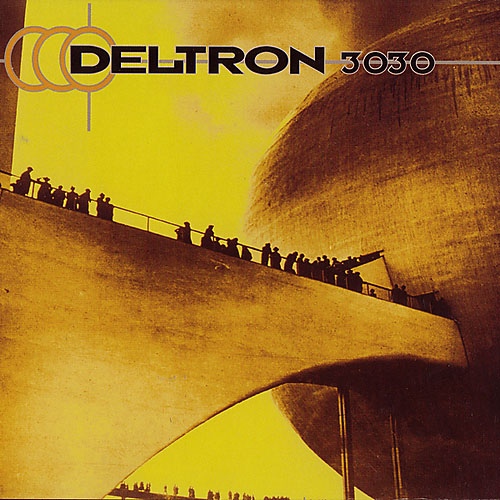
Deltron 3030 is a supergroup consisting of MC Del the Funky Homosapien, producer Dan the Automator — both hailing from the San Francisco Bay Area — and DJ Kid Koala, from Vancouver. They’re all prolific and celebrated in their own niches, but this record is, in my opinion, the best distillation of everything the three bring to the table. Remember Gorillaz’ first single, ‘Clint Eastwood’? That’s these three guys plus Damon Albarn, a year after Deltron 3030 came out. (As far as I’m concerned, ‘Clint Eastwood’ is a Deltron 3030 song. Hell, they even do it as their encore when they play live.)

Deltron 3030 is a concept album. The year is 3030, and times are tough for Deltron Zero and his sidekick Automator. Hip hop is outlawed, corporations rule the galaxy with an iron fist, and Deltron is on the run from a corrupt military-industrial complex — or at least that’s been my interpretation. Unlike a more classic concept album like Rush’s 2112, Deltron 3030 doesn’t have a clearly defined narrative arc. Instead, it’s more of an exercise in atmosphere and world-building. There are some set pieces here and there, but a lot of it is just Del — an MC renowned for his ability to freestyle — riffing on post-apocalyptic sci-fi imagery and technobabble over Automator’s gritty, stripped-down beats. (It may interest you to note that Dan is a classically trained violinist, and many of the samples on this record come from the music of contemporary classical composer William Sheller.)

The result is utterly captivating. There is no other rapper in the world who sounds like Del. And more than anything, this record really seems to capture this feeling of the ‘used future’ of something like Star Wars or Alien — a future that feels dirty and diseased, run-down and as far from the shiny idealism of Star Trek as it’s possible to get. The universe of Deltron 3030 is in rough shape.

This album is very much a product of its time, of course. The various skits and vocal cameos are a who’s-who of 90s alternative hip hop. Released in the year 2000, it shares a cultural moment with other similar sci-fi classics like The Matrix, The X-Files, and even Final Fantasy VII. It definitely feels like an album that came out in 2000 — but in a good way. It has aged extremely well (how scarily prescient is the track ‘Virus’?), and I think a lot of that has to do with how it just sort of sprung into the world fully formed. Like a lot of cult classics, there wasn’t a lot of hype when it first came out, and it’s only in the following years that it amassed its legion of fans. (In 2013, the band released a long-awaited followup, Event II — which is a good album too, don’t get me wrong. But unless you’re Death From Above 1979, it’s hard to get that sort of lighting to strike twice.)

Obviously, I love Deltron 3030. And I know you have a taste for MF DOOM and Madlib’s Madvillainy, so I think you might too. I am very much looking forward to your thoughts on this album.

— Matt