Unknown's avatar

About Matt

Hi! I like shorts! They're comfy and easy to wear!

Magma: live in concert (pt. 2)

Symbole_de_Magma

Dear Matthew:

That was certainly a prog rock band.

Now, I’m not ready to give up on prog just yet. There’s got to be something out there I can really get into. Maybe I should finally give these King Crimson guys that everyone keeps talking about a spin. But Magma is definitely not for me.

There’s no arguing that Magma are talented. The tone their bassist gets out of his instrument is incredible. Their drummer’s vocal solo in what you informed me was your favourite Magma song of all time would put any classically trained tenor in the world to shame, and his drum face is amazing. There were definite moments in the set that I enjoyed. But there’s only so far that raw talent can take you in terms of making music that’s actually enjoyable for (most) people to listen to. Sure, it’s very technically impressive that you can play in weird keys and modes and flawlessly stick to bizarre time signatures and invent an entire language in which to sing. But that means you end up with music with no riffs to ride on, no grooves to lock into, and no vocal hooks to lodge in people’s brains.

In other words, you end up with probably the least accessible music I have ever heard.

I expressed this sentiment to you after the show, and you didn’t disagree. And indeed, the lack of accessibility doesn’t seem to have prevented Magma from growing a solid fanbase over the years — a substantial portion of the crowd were nodding/singing/otherwise moving in a way that suggested rather intimate familiarity with the material. So what’s the missing link here? What am I not getting?

You’ve said that you don’t like not liking things because it makes you feel ignorant, and that’s kind of how I’m feeling about this. I found myself asking myself the same thing you asked of Beardyman: ‘What is this music even for?’ Since everything is so abstract and non-traditional, they could be just standing there making shit up for an hour and a half and I would have no idea. In calling these guys out, though, I feel kind of like the guy who complains that his three-year-old could paint a Jackson Pollock.

I don’t know. Maybe it’s telling that I was at the same venue less than a week prior to see the Ting Tings, who are about as diametrically opposed to Magma as you can get while still actually playing drums and stringed instruments. Maybe going to a show with the intention of intellectualizing it afterward is a flawed approach, especially when an MC comes out before the show and explicitly instructs the audience to not try to intellectualize the show. But the more I think about it the more I realize: apart from virtuosic performances, that show had almost none of the elements I appreciate in live music, or even music in general.

But that’s not what a band like Magma is going for, is it.

— Matt

Die Antwoord: selected videography (pt. 1)

dieantwoord

Dear Matthew:

I just watched an insane movie called Chappie, so this week you’re going to listen to some Die Antwoord.

Die Antwoord (‘the answer’) are hard to describe. They’re usually referred to as a ‘rap-rave’ group, but that really only scratches the surface. The principle members, Ninja and Yo-Landi Visser, are two white South African lowlifes who espouse the idea of ‘zef’, a Afrikaans slang term that means something like a white equivalent of ‘ghetto fabulous’. Along with the mysterious (and possibly apocryphal) DJ Hi-Tek, they make over-the-top club rap in a mix of English and Afrikaans that embraces every ridiculous trope of the genre — all accompanied by some of the most insane music videos ever committed to film.

…except that’s not really the whole story either. Digging beyond the initial weirdness yields no answers, only more weirdness. Ninja and Yo-Landi seem to have a Jack and Meg White sort of relationship — they have a daughter, but it’s not really clear if they’re dating, if they ever have dated, or even when they first met. They’ve both been involved in various other hip hop and art projects before Die Antwoord, and the pair seem to have both attended and later dropped out of art school at some point. Zef doesn’t seem to have really even been a thing before Die Antwoord, or at least not as they portray it. When the band was first blowing up, all of this led a lot of music journalists to write a lot of tiring essays about what Die Antwoord actually is. Is it a prank? Is it performance art? Is it insensitive cultural appropriation? Are they even a ‘real band’? What does ‘real band’ even mean? Do any of these questions matter to anyone who isn’t a music journalist?

I have my own thoughts on Die Antwoord — and even more on the absolutely bonkers aforementioned Neill Blomkamp film in which they star as ‘themselves’ — but I’m interested in hearing yours. Of course, if I just had you listen to an album, you’d be missing out on probably the most striking component of the band, which is their videos. So, in lieu of an album, I’ve put together a selected videography for you to peruse. (A viewing of Chappie afterward is optional, but encouraged.)

Sit back. Relax. Set your YouTube window to fullscreen. And hold on tight.

— Matt

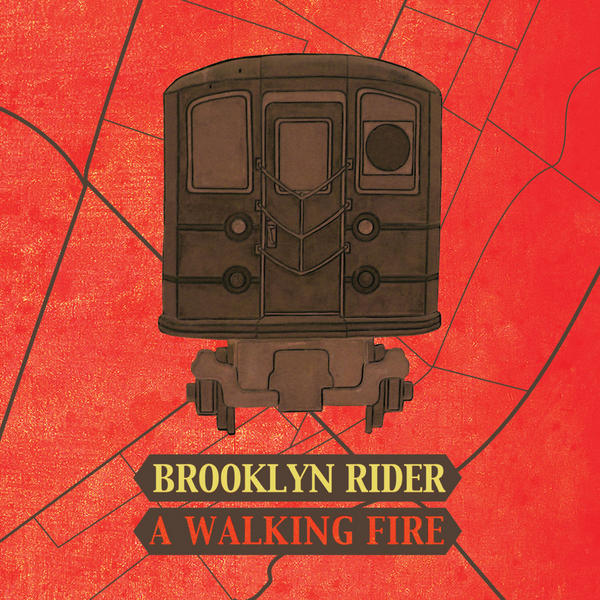
Brooklyn Rider: A Walking Fire (pt. 2)

brooklyn-rider-a-walking-fire_0

Dear Matthew:

This was an interesting experience.

First of all, full disclosure: for the most part, my understanding of classical music is what I believe kids these days would refer to as ‘basic’. For me, like most Canadians, classical music is the stuff that comes out of the car stereo speakers if I accidentally tune into Radio Two outside of standard commuting hours — it’s not entirely unpleasant, but I don’t go out of my way to listen to it. I’m not entirely uninformed — I do have my Grade 8 in piano, something I find as hard to believe as you probably do — but I’m not exactly a font of knowledge, either.

Thanks for starting me with a string quartet. It seems like the most accessible way into this sort of thing. The string quartet seems to be the least pretentious of the various classical tropes. It’s not a huge orchestra with dozens of players and it’s not a virtuosic soloist in whose glory you’re supposed to bask. It’s just four dudes. I like that. It’s a familiar setup.

Quartets also seem to be the only ‘hip’ way to be a classical musician to anyone outside of classical circles. Even with my limited knowledge, I still know who the Kronos Quartet are. Quartets seem to be allowed to get away with a lot boundary pushing that more traditional orchestras seem uncomfortable with.

To wit: the first movement of the first piece on this record, ‘The Game’, is one of the more striking bits of music I’ve heard in recent memory. Its lilting rhythm and odd time signature drive it along as it dips its toes into all sorts of genre palettes. At times it almost felt like something you’d here in an old-timey Wild West-type saloon, at other times almost like swing jazz — in fact, it struck me as being not altogether unlike something like ‘Tired of Waiting’ from NoMeansNo’s Wrong, in that sense. At several points in the Culai piece, there’s even something that sounds pretty much exactly like a pick slide. This is cool stuff, I was thinking to myself. I can get into this.

I have to admit, though, that my interest was waning by the time the Bartók came on. Maybe it’s just a result of my listening strategy? If I’d planned a little better in advance, my I could’ve listened to the album in three parts to avoid the fatigue that was setting in? Or I don’t know, maybe my Millennial attention span just can’t handle anything longer than a verse-chorus-verse-chorus-solo-chorus pop song.

(I actually want to talk about how I listen to new music generally speaking at some point, but here I go talking about the actual music I listened to, so I suppose it’ll have to wait for another week.)

All said, this was pretty much exactly what I was hoping for when we started this project: being intrigued by something completely outside my wheelhouse. This is fun. I’m very interested to hear what else you have lined up for me.

— Matt

Beardyman: live in concert (pt. 1)

beardyman

Dear Matthew:

I’m pleased to hear that you liked Wrong. It fills me with hope.

But, as discussed in real life, we’ll be doing something a little different this week. I know it’s a little early in this blog’s life for a format change, but you had the idea that we should make each other go to some live shows. Mostly I just think you couldn’t convince anyone else to go see Magma with you later this month, but either way, we’re switching it up this week, and this week, you’re coming with me to see Beardyman.

Daren ‘Beardyman’ Foreman is hard to describe; any one term I think of is inadequate on its own. He’s a beatboxer. He’s a mimic. He’s an improviser. He’s a live looper. He’s a producer. He’s got about a million things going on in his head at any one time, and he keeps getting better and better at turning them into music with ever decreasing latency. To this end, he has created a device he calls the Beardytron 5000, and that’s what he’ll be using when we see him play on Wednesday.

The Beardytron 5000 is, essentially, a device for translating the sounds in Foreman’s head into music in as close to real time as possible. It’s a series of iPads and various control surfaces hooked up to a number of computers, and Foreman uses it to sample his voice, and then loop and tweak it in any boundless number of ways. It may look like he’s using prerecorded noises or preset synthesizers up there, but he’s not — it’s all built on his voice.

He’s also hilarious. I expect that this particular performance will be mostly just him making (comparatively) straightforward music, since he’s touring to promote his new album, but at other times his performances are almost closer to standup comedy. A favourite gag of his is to ask the audience to shout out genres and made-up song titles, which he will create on the spot. (His sense of humour is also pitch black, which I’m beginning to realize is a common feature in things I like.)

I’m not sure how much appreciation you have for electronic dance music, but I know you like talented and unique musicians, and there are few musicians more talented or more unique than Beardyman. I hope you enjoy the show.

— Matt

NoMeansNo: Wrong (pt. 1)

wrong

Dear Matthew:

I promised you that this project would involve you listening to some punk rock. The time has come. But fear not — I’m going to ease you into it. This week, you’ll be listening to NoMeansNo‘s seminal 1989 opus, Wrong.

It’s actually kind of hilarious that I’m using the word ‘ease’ in the same paragraph as NoMeansNo; they’re about the most challenging punk rock band I can think of. They’re mathy and jazzy and even sometimes a little proggy — words that are kind of hilarious to find in the same paragraph as ‘punk rock’ — but they’re also thrashy and angry and they infuse everything they do with an absolutely pitch-black sense of humour. So, the way I see it, they’re built on the bedrock of everything that’s great about punk rock, but they approach it with — well, with an approach to the craft that you’ll find more palatable.

At its core, NoMeansNo is the brothers Rob and John Wright, on bass/vocals and drums respectively. The pair from Victoria, BC, though the band is now based in Vancouver. Over the years, guitar and backup vocal duties have been handled by Andy Kerr (as they are on Wrong), and later by Tom Holliston, but unlike most punk rock, the guitar is mostly just flavour; Rob is definitely the frontman, his basslines always the musical main-mast. Live, the three play side by side on stage — with John facing Rob, so the audience gets a good look at John’s playing.

Here’s another thing about NoMeansNo: they’re old. Like, I’m pretty sure they’re older than my dad. That said, they continue to rock harder than any band of their vintage that you care to name, and they’re still putting out good records; 2006’s All Roads Lead to Ausfahrt is in a dead heat with Wrong for my favourite of theirs. I mean, I guess when you’re a band for 36 years, you get pretty good at playing with each other, but these guys all had the chops from the beginning — and they can still shred every lick just as hard as the day it was recorded. In case I haven’t made myself clear: if you get an opportunity to see them play, take it. I only hope I can rock half that hard when I’m that old.

Wrong itself is interesting for a lot of reasons. For one, the title is probably the clearest example of the ‘(W)right’/’wrong’-based wordplay in which in the band frequently engages. Rob was recovering from vocal chord nodules at the time, so it’s atypical in that it features a lot of vocals from then-guitarist Kerr. It’s also probably the best cross-section of the various things the band is capable of musically. There are short, old-school punk rock rippers like ‘Two Lips, Two Lungs and One Tongue’; sludgy, sprawling epics like the album closer ‘I Am Wrong’; and whatever you’d call the madness that is ‘Big Dick’. Wrong is all over the map, and I love it.

If you can’t get into punk rock, then hey, you can’t get into punk rock. I know it’s not for everyone. But for a man of your particular tastes, this is the best possible gateway drug I can think of. If this doesn’t work, I don’t know if anything will.

— Matt

Kate Bush: Hounds of Love (pt. 2)

katebush

Dear Matthew:

I thought you told me this album was going to be weird.

OK, I mean, it’s a little out of the ordinary. The second side did get a little out there. (The brief highland dance interlude definitely blindsided me.) And Bush’s voice is certainly not a typical pop star voice. But mostly I was just like, yeah, I could get into this.

As I thought about it, I realized that’s because I already am.

Seinfeld (stay with me on this one) is widely considered to be one of the best, most successful, most groudbreaking television programs of all time. The so-called ‘show about nothing,’ following the often bizarre adventures of four borderline-sociopathic residents of New York City, completely revolutionized the world of primetime TV. But if you were to take the average middle school-aged kid today in 2015 and show them a random episode of Seinfeld, you’d probably get a response along the lines of: “This isn’t funny.” (Or at the very least, that it’s not particularly original.)

Of course, it’s not that Seinfeld isn’t funny. Rather, it’s that Seinfeld was so funny that everything about it has been imitated by its successors to the point that aspects of the show that were once groundbreaking (the unlikable cast, idiosyncratic language, the dissection of the quirks of polite society, etc.) are now a standard part of the genre. Seinfeld changed TV so fundamentally that, to someone with a cultural tabula rasa, its explosive originality is essentially invisible.

This phenomenon crops up in other media all the time. I’m sure this hypothetical middle-schooler would be completely nonplussed by Die Hard, and would tell you that Final Fantasy VII is a category-five cliché storm dressed up to passingly resemble a video game.

I put it to you that Kate Bush is the Seinfeld of female art-pop stars.

Bush has this apparent reputation for weirdness, but taken alongside contemporary acts like Björk, Fever Ray, or even someone like M.I.A., she’s really not as out there as I’ve been lead to believe. But I expect that this is in large part because she was the prototype for this particular type of act. Hell, even Lady Gaga owes some portion of her success to Kate Bush.

This was a fun listen. Plus, I now have some interesting new ideas for future assignments. But that’s all yet to come — I still need to rub your face in some punk rock first.

— Matt

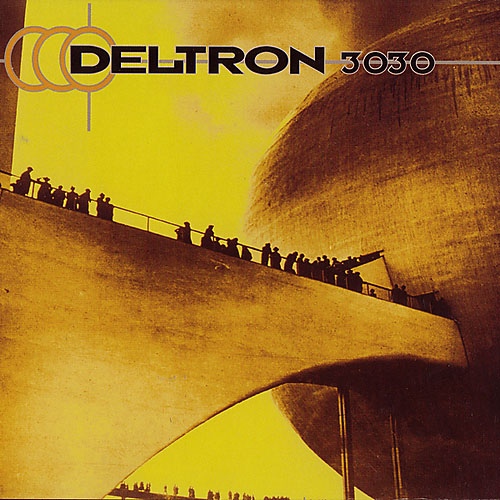
Deltron 3030: Deltron 3030 (pt. 1)

deltron3030

Dear Matthew:

Last week, you had me listen to some goofy, epic, over-the-top prog rock. In that spirit, your first assignment is probably the closest thing the hip hop canon has to prog: Deltron 3030.

Deltron 3030 is a supergroup consisting of MC Del the Funky Homosapien, producer Dan the Automator — both hailing from the San Francisco Bay Area — and DJ Kid Koala, from Vancouver. They’re all prolific and celebrated in their own niches, but this record is, in my opinion, the best distillation of everything the three bring to the table. Remember Gorillaz’ first single, ‘Clint Eastwood’? That’s these three guys plus Damon Albarn, a year after Deltron 3030 came out. (As far as I’m concerned, ‘Clint Eastwood’ is a Deltron 3030 song. Hell, they even do it as their encore when they play live.)

Deltron 3030 is a concept album. The year is 3030, and times are tough for Deltron Zero and his sidekick Automator. Hip hop is outlawed, corporations rule the galaxy with an iron fist, and Deltron is on the run from a corrupt military-industrial complex — or at least that’s been my interpretation. Unlike a more classic concept album like Rush’s 2112, Deltron 3030 doesn’t have a clearly defined narrative arc. Instead, it’s more of an exercise in atmosphere and world-building. There are some set pieces here and there, but a lot of it is just Del — an MC renowned for his ability to freestyle — riffing on post-apocalyptic sci-fi imagery and technobabble over Automator’s gritty, stripped-down beats. (It may interest you to note that Dan is a classically trained violinist, and many of the samples on this record come from the music of contemporary classical composer William Sheller.)

The result is utterly captivating. There is no other rapper in the world who sounds like Del. And more than anything, this record really seems to capture this feeling of the ‘used future’ of something like Star Wars or Alien — a future that feels dirty and diseased, run-down and as far from the shiny idealism of Star Trek as it’s possible to get. The universe of Deltron 3030 is in rough shape.

This album is very much a product of its time, of course. The various skits and vocal cameos are a who’s-who of 90s alternative hip hop. Released in the year 2000, it shares a cultural moment with other similar sci-fi classics like The Matrix, The X-Files, and even Final Fantasy VII. It definitely feels like an album that came out in 2000 — but in a good way. It has aged extremely well (how scarily prescient is the track ‘Virus’?), and I think a lot of that has to do with how it just sort of sprung into the world fully formed. Like a lot of cult classics, there wasn’t a lot of hype when it first came out, and it’s only in the following years that it amassed its legion of fans. (In 2013, the band released a long-awaited followup, Event II — which is a good album too, don’t get me wrong. But unless you’re Death From Above 1979, it’s hard to get that sort of lighting to strike twice.)

Obviously, I love Deltron 3030. And I know you have a taste for MF DOOM and Madlib’s Madvillainy, so I think you might too. I am very much looking forward to your thoughts on this album.

— Matt

Van der Graaf Generator: Godbluff (pt. 2)

godbluff

Dear Matthew:

Oh dear. What have I gotten myself into?

I’ll start by saying that your hodgepodge of adjectives was spot on — this album is certainly bombastic, dramatic, and more than a little bit camp. But I think you and I might be operating on different definitions of the word ‘lean.’

Here’s a not-very-surprising confession: I don’t like prog. But it’s not the seething punk-rock hate I had for it in high school, more as a knee-jerk contrarian reaction to my peers discovering and loving it than anything. Instead, it’s now more that I just don’t really rate it.

I think there’s a sort of window in which you have to first be exposed to certain genres of art and culture, and if you miss that window, some things won’t ever really grab you. Take high fantasy, for example. If you don’t get really into swords and dragons and all that stuff before you graduate high school, you probably never will. (HBO’s shameless attempts to titillate notwithstanding.) I think it’s probably the same with prog, and as I mulled this album over thinking about what to write, I think I have a theory as to why.

It’s because these genres are all, at their core, very silly.

But it’s more than just silliness. It’s a sense of epicness and grandiosity — underpinned with an often endearingly naive worldview — operating on a sense of scale that’s just so different from the modern Western rat-race nine-to-five wage-slave life we see around us that we find compelling at that age. Rush’s 2112. The Star Wars films. Iron Maiden. Japanese role-playing games. Anything Tolkein. Fight Club. Are you kidding me? Pissed off teenagers eat this shit up.

Don’t get me wrong — I’m not trying to devalue prog or sci-fi or fantasy by calling them childish or anything like that. These things are widely loved and bring a lot of joy to a lot of people, and there is a pretty clear societal value in their existence. I’m just saying that I think I missed this particular boat.

What’s confusing me, though, is what I alluded to earlier: I didn’t really dislike Godbluff, either. I almost wish I had, because that might’ve made for more entertaining reading. Instead, I was just kind of nonplussed. And the more I try to articulate why, the more it stresses me out that I can’t.

Which is ludicrous, when you think about it. Here’s this guy wailing about epic battles and this music rising and falling and all of this virtuosity and energy all but jumping out of my speakers and smacking me upside the head — and yet it just doesn’t do anything for me.

Maybe I’m still not doing a good job of approaching the music on its own terms. Maybe I’m desensitized by hearing bands like the Mars Volta take things even further off the sonic deep end. Maybe pop music has ruined my attention span. But whatever the case, I’m determined to get to the bottom of this. If this project doesn’t end up opening my mind to new music, maybe it can at least help me figure out why.

And you’re right. That man really can’t play the saxophone.

— Matt